


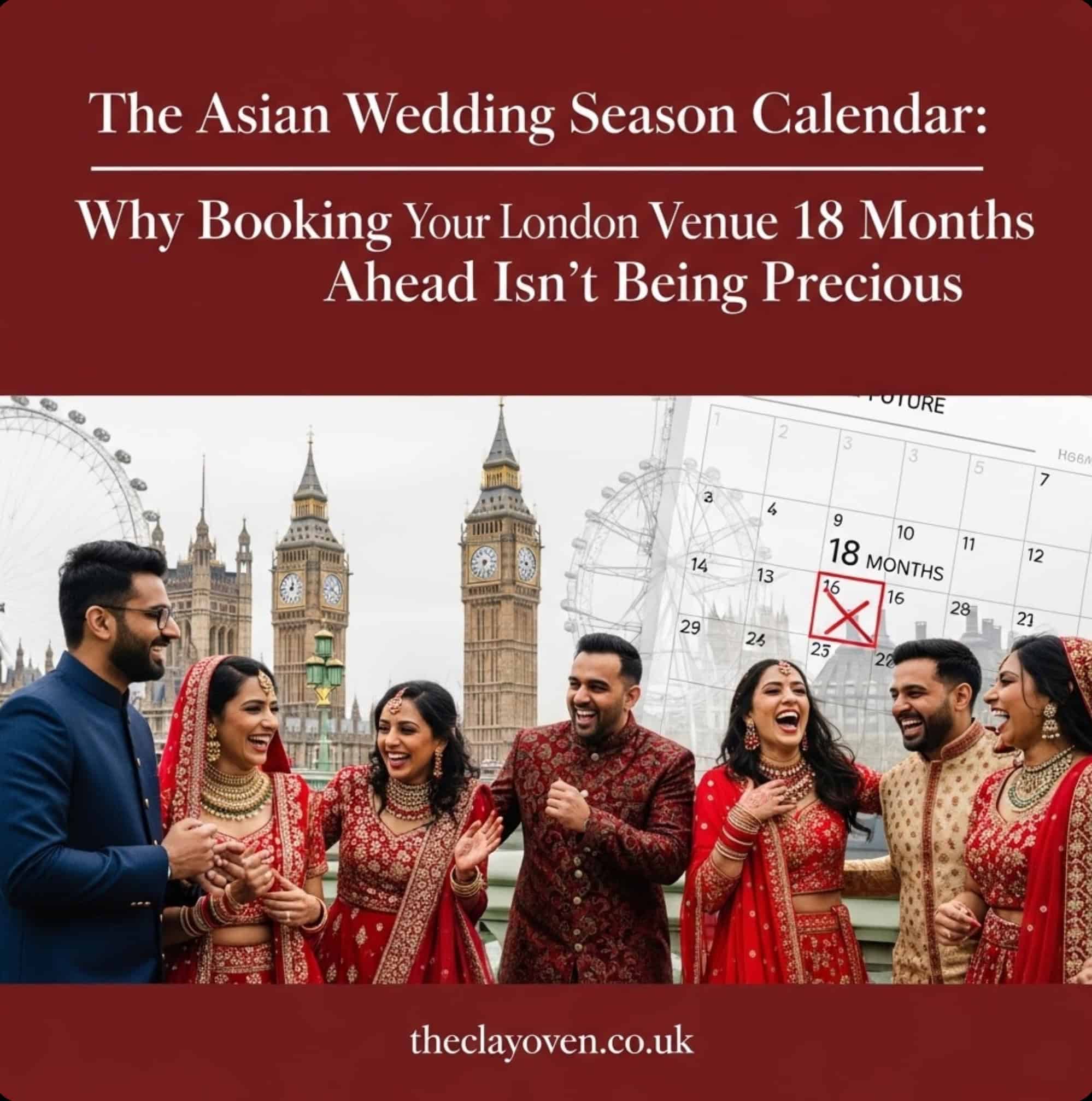
The Asian Wedding Season Calendar: Why Booking Your London Venue 18 Months Ahead Isn’t Being Precious
Every January, the same conversation unfolds across our Wembley, Denham Grove, and Hunton Park venues. Couples contact us wanting to book their autumn wedding—for that same year. When we explain that our peak season dates are already committed 12 to 18 months in advance, the response is often disbelief. “Surely you must have one Saturday available in September?”
We don’t. And it’s not because we’re being difficult or deliberately exclusive. It’s because Asian wedding season in London operates on booking timelines that couples unfamiliar with the industry consistently underestimate. Understanding these seasonal patterns, the cultural factors driving them, and the practical implications of peak demand isn’t just useful information—it’s essential for actually securing the venue and date you want rather than settling for whatever remains available.
Why May Through October Dominates Asian Wedding Bookings
The concentration of Asian weddings between late spring and early autumn isn’t random or simply weather-driven. Multiple factors converge to make these months overwhelmingly preferable for British Asian families, creating demand that far exceeds venue capacity during this period.
Astrological considerations remain significant: Hindu and Sikh families often consult astrologers or reference traditional calendars to identify auspicious wedding dates. These consultations frequently recommend dates falling between April and November, with certain months considered particularly fortunate. Whilst not every family follows these recommendations strictly, enough do that it concentrates bookings significantly during these periods.
Weather reliability matters more for Asian weddings: Traditional Asian wedding elements—outdoor mehndi ceremonies, guests in elaborate clothing suited for photography, extended celebrations that might involve outdoor spaces—all benefit from the warmer, more predictable weather that British summers offer. A June wedding in London provides reasonable confidence for outdoor elements. A February wedding requires contingency planning that complicates rather than enhances celebrations.
School holidays influence guest attendance: Many Asian weddings involve substantial family attendance, including relatives travelling from abroad and families with children. The summer months, particularly July and August when schools break, allow easier attendance without children missing education. Extended families can coordinate travel more readily, and overseas relatives can combine wedding attendance with UK visits.
Cultural festival timing creates blackout periods: Certain months see reduced wedding bookings due to religious observances. Many Hindu families avoid weddings during specific months based on the lunar calendar. Muslim families consider Ramadan timing. These cultural factors concentrate available wedding dates into narrower windows, intensifying competition for popular months.
The result is predictable: approximately 60% of Asian weddings in London occur during a six-month window from May through October, with June, August, and September seeing particularly intense demand. Our venues literally cannot accommodate every couple wanting these months, regardless of how much we might wish to help.
The 18-Month Booking Window Isn’t Arbitrary
When we recommend booking 18 months in advance for peak season dates, couples sometimes interpret this as sales pressure or venue policy designed to lock in commitments early. The reality is more straightforward: it’s simply when our calendars fill.
Consider the mathematics. Denham Grove accommodates up to 200 guests across weekends from May through October—roughly 26 weekends. Accounting for dates already committed to returning clients, corporate bookings, and the occasional weekend reserved for essential maintenance, perhaps 20 weekends remain available for new Asian wedding bookings during peak season.
Now consider demand. We receive enquiries from couples wanting peak season dates throughout the year. Even if only a fraction of enquiries convert to bookings, and even accounting for couples who ultimately choose other venues, the supply-demand equation tilts heavily towards scarcity within months of dates becoming available.
At Hunton Park, the dynamic is similar despite different capacity. The Georgian mansion’s historic elegance attracts couples willing to book well in advance to secure their preferred dates. Our Wembley suites, accommodating 300 to 500 guests, fill quickly for peak season because fewer London venues can handle events at that scale.
The 18-month window simply reflects market reality. Couples serious about securing premium venue dates during peak season book when dates first become available. Those who delay find their options increasingly limited, often settling for less preferred months, less desirable venue spaces, or entirely different venues than they’d originally hoped for.
What Actually Happens When You Book Late
Couples who contact us six months before their desired wedding date—a timeline that would be perfectly reasonable for many purchases—encounter a reality that often surprises and disappoints them.
Your preferred month is almost certainly unavailable: By six months out, peak season dates at quality Asian wedding venues across London are committed. You’re not competing for dates with couples booking at that moment—you’re competing with couples who booked 12 or 18 months earlier. The dates are simply gone.
Secondary venue spaces might be available but aren’t equivalent: Some venues offer multiple event spaces with different capacities and aesthetics. When primary spaces are fully booked, couples booking late might secure dates in secondary spaces that don’t match what they’d originally envisioned. This isn’t ideal but might be acceptable depending on priorities.
Stretching your date flexibility becomes essential: Couples initially wanting an August Saturday wedding might find themselves choosing between a Friday wedding in August, a Sunday wedding in July, or a Saturday in November. None matches their original vision, but these compromises become necessary when booking late.
Vendor availability compounds the problem: Popular wedding photographers, decorators, entertainment providers, and other suppliers also book 12 to 18 months ahead for peak season. Even if you somehow secure a venue date, coordinating all other vendors becomes increasingly difficult as your booking timeline compresses.
Rushed planning creates stress and compromises: Wedding planning requires time for thoughtful decisions about menus, decorations, timelines, and countless details. Couples booking six months out compress this process unnaturally, making decisions under pressure rather than carefully considering options.
The cumulative effect often means couples settling for outcomes that don’t match their initial vision, spending more because they lack time to compare options, and experiencing higher stress throughout the planning process. All of this is avoidable through earlier booking.
The Off-Peak Opportunity That Couples Overlook
Whilst most Asian weddings concentrate in peak season, the November through April period offers genuine advantages that couples often dismiss without proper consideration.
Substantial cost savings across all vendors: Off-peak pricing isn’t just a venue phenomenon—photographers, decorators, entertainment providers, and catering suppliers all offer better rates during quieter months. A winter wedding at The Clay Oven might cost 20-30% less than an identical summer celebration, savings that can fund upgrades elsewhere or reduce overall budget pressure.
Genuine availability and flexibility: When you’re booking off-peak, you’re choosing from available dates rather than accepting whatever remains. Prefer a Saturday? Usually available. Want specific dates that hold personal significance? Likely possible. This flexibility extends to vendor selection, allowing you to book your actual preferred suppliers rather than whoever remains available.
Intimate atmosphere that suits certain celebrations: Winter weddings at venues like Hunton Park create cosy elegance that summer events cannot replicate. Candlelight, fireplaces, and elegant indoor settings provide distinct aesthetic appeal. For couples who value intimate atmosphere over outdoor elements, off-peak timing might actually enhance rather than compromise their vision.
Reduced competition for attention and attendance: During peak season, your guests might receive multiple wedding invitations for similar dates. During off-peak periods, your celebration is likely the only wedding your guests attend that month, ensuring focused attention and reducing scheduling conflicts.
Honeymoon destination advantages: Travelling during off-peak wedding season often means off-peak travel season, providing better value and fewer crowds at honeymoon destinations. A February wedding enables a March honeymoon when many destinations offer ideal conditions without peak-season pricing.
The key is approaching off-peak weddings strategically rather than treating them as consolation prizes. Indoor Asian weddings at properly equipped venues like ours work brilliantly regardless of season. The celebration quality depends on planning and execution, not whether it occurs in August or February.
How Cultural Calendars Actually Affect Availability
Understanding the specific cultural and religious factors affecting Asian wedding timing helps couples plan strategically rather than competing for the same narrow date windows as everyone else.
Hindu wedding season timing: Traditional Hindu weddings often avoid certain months based on the lunar calendar and astrological considerations. However, these restrictions aren’t universal across all Hindu communities, and modern British Hindu families often interpret them flexibly. Understanding which months are genuinely problematic for your family versus which are simply tradition allows for more realistic date selection.
Sikh wedding considerations: Whilst Sikh weddings can technically occur year-round, practical considerations around weather and availability lead to similar seasonal concentration as Hindu weddings. However, Sikh families might have more flexibility around specific date selection within preferred months.
Muslim wedding timing: Islamic calendar considerations, particularly around Ramadan, affect Muslim wedding timing. However, because the Islamic calendar is lunar, these dates shift annually relative to the Gregorian calendar, creating different planning considerations each year.
Pan-Asian pattern recognition: Despite cultural variations, British Asian weddings of all backgrounds tend to concentrate during similar months because many factors—weather, school holidays, venue availability—affect all communities similarly. This means Christians, Hindus, Muslims, and Sikhs often compete for the same peak season dates.
The strategic approach involves understanding your family’s genuine cultural requirements versus preferential timing. If astrological guidance is essential, obtain it early and use it to inform rather than dictate venue booking. If weather is your primary concern but cultural calendars offer flexibility, consider shoulder season months like May or October that balance reasonable weather with better availability.
The Venue Perspective: Why We Can’t Just Add More Dates
Couples sometimes wonder why venues don’t simply accommodate more weddings during peak season. If demand is so high, why not maximise bookings and revenue?
Quality requires time and resources: Hosting a wedding properly requires complete venue setup, dedicated staff attention, thorough post-event cleaning and reset, and adequate preparation time. Cramming more events into compressed timeframes compromises the quality of service we can provide. We’d rather host fewer weddings excellently than more weddings adequately.
Staff capacity is finite: Our award-winning chefs, experienced event managers, and professional service teams can only work so many events consecutively before quality and attention suffer. Pushing teams beyond sustainable limits creates burnout, increases mistakes, and ultimately disappoints clients.
Venue infrastructure has limits: Kitchen capacity, equipment availability, setup and breakdown logistics—all impose constraints on how many events we can host in given periods. Our venues are designed for specific capacities executed excellently, not maximum throughput executed adequately.
Existing client commitments matter: Many of our clients book recurring annual events—corporate functions, community celebrations, family traditions. Honouring these existing commitments means certain dates aren’t available for new bookings regardless of demand.
The fundamental reality is that quality venues deliberately limit bookings to maintain service standards. We could theoretically host more weddings, but we’d be delivering different, lesser experiences than what we’ve built our reputation on. Couples choose The Clay Oven specifically for the quality we provide, which requires the time and resources to do things properly.
Making Peak Season Work: Strategic Booking Approaches
For couples determined to secure peak season dates at preferred venues, strategic approaches dramatically improve your success odds.
Start planning earlier than feels necessary: Even if your wedding is 24 months away, beginning venue research and booking allows you to secure optimal dates. This seems impossibly early to many couples, but it’s standard practice for those who successfully book premium venues during peak season.
Prioritise venue booking before other decisions: Some couples want to finalise their guest list, establish their budget, or make other decisions before booking venues. This delay costs them preferred dates. Book your venue first, then plan around that commitment rather than trying to coordinate everything simultaneously.
Consider weekday or Sunday weddings: If Saturday peak season dates are unavailable, Friday or Sunday celebrations might be possible. Whilst weekday weddings require more guest coordination, they’re increasingly common and often come with slight cost advantages even during peak season.
Build relationships with venues early: Contact venues well before you’re ready to book, attend open days, and express genuine interest. When dates become available, venues often contact previously interested couples before dates are publicly released.
Be prepared to commit quickly: When your preferred date becomes available, having already completed venue visits and decision-making processes allows immediate booking. Couples who need to “think about it” or coordinate with extended family often lose dates to others prepared to commit immediately.
Understand that flexibility is valuable: Couples wedded to one specific date (perhaps an anniversary or significant calendar date) face much longer waits and more limited options than those flexible within a preferred month or season.
The Clay Oven Approach to Peak Season Bookings
Our three venues—Wembley’s grand banqueting suites, Denham Grove’s Buckinghamshire parkland setting, and Hunton Park’s Georgian elegance—each attract couples wanting peak season dates. Managing this demand fairly whilst maintaining the quality we’re known for requires structured approaches.
We operate a straightforward first-come system: Dates are offered to couples in the order enquiries arrive and venue visits are completed. We don’t hold dates for anyone without confirmed bookings. This fairness ensures serious couples who plan ahead secure dates rather than those simply hoping to reserve options.
We’re transparent about actual availability: When couples contact us about peak season dates, we provide honest assessments of what’s actually available rather than vague promises about “checking the calendar.” This saves everyone time and prevents false expectations.
We suggest realistic alternatives: When preferred dates aren’t available, our event managers suggest comparable options based on understanding what actually matters to each couple. Sometimes it’s the specific month, sometimes the venue space, sometimes the guest capacity—knowing priorities helps us suggest alternatives that might work.
We don’t oversell our capacity: Some venues double-book dates assuming some bookings will cancel or accept booking far more events than they can properly serve. We maintain conservative booking policies that prioritise delivering excellent experiences over maximising revenue.
We maintain waiting lists when appropriate: For couples genuinely committed to specific dates, we maintain waiting lists for potential cancellations. Whilst these don’t often result in bookings (cancellations are rare), they at least provide a possibility.
The underlying principle is respect—for our clients’ time, their planning efforts, and their celebrations. We’d rather honestly tell couples their preferred dates aren’t available than encourage unrealistic expectations or compromise service quality through overbooking.
Planning Your Booking Timeline
Given these realities, what’s the optimal booking timeline for Asian weddings at London venues like The Clay Oven?
18-24 months ahead for peak season: If you’re determined to marry between May and October at a preferred venue, begin your venue search 24 months before your desired date and be prepared to book 18 months ahead. This timeline isn’t excessive—it’s realistic given market conditions.
12-15 months ahead for shoulder season: April, May, October, and November offer better availability whilst still providing reasonable weather. Booking 12-15 months ahead usually provides good selection at quality venues during these months.
6-12 months for genuine off-peak: January through March and November through December see substantially lower demand, making shorter booking timelines feasible. Some couples even successfully book quality venues just months ahead during these periods, though we wouldn’t recommend cutting it that fine.
Factor in your specific requirements: Couples needing very large capacity (our Wembley suites’ 300-500 guests), specific venue characteristics (Hunton Park’s Grade II* listed Georgian architecture), or particular amenities (Denham Grove’s 48 acres and 100 bedrooms) might need to book even earlier because fewer venues match these specifications.
The guidance is clear: if securing your preferred venue and date matters significantly, earlier booking dramatically improves your odds. The couples who contact us disappointed by limited availability invariably started their search much later than those who successfully secured their ideal dates.
What This Means for Your Planning
Understanding Asian wedding season patterns, booking timelines, and venue availability realities helps couples plan strategically rather than reactively. The venues, dates, and celebrations you envision are absolutely achievable—but they require acknowledging how the industry actually operates rather than how you might wish it operated.
At The Clay Oven, we’re fortunate to work with couples throughout the year, from peak season celebrations to off-peak winter weddings. Each season offers distinct advantages when approached thoughtfully. What doesn’t work is last-minute booking during peak demand periods whilst expecting full availability and unlimited flexibility.
Begin your planning early, understand the factors driving seasonal demand, book when you’ve found the right venue rather than delaying unnecessarily, and you’ll secure the celebration timing and setting you truly want rather than settling for whatever remains available.
The Clay Oven operates three exceptional venues for Asian weddings across London, Wembley, Buckinghamshire, and Hertfordshire. Our Wembley banqueting suites (300-500 guests), Denham Grove’s parkland estate (up to 200 guests, 100 bedrooms), and Hunton Park’s Grade II listed Georgian mansion (72 rooms) each offer distinctive settings for celebrations throughout the year. Contact us at 020 8903 8800 to discuss availability for your preferred dates and discover which of our venues best matches your vision.*