


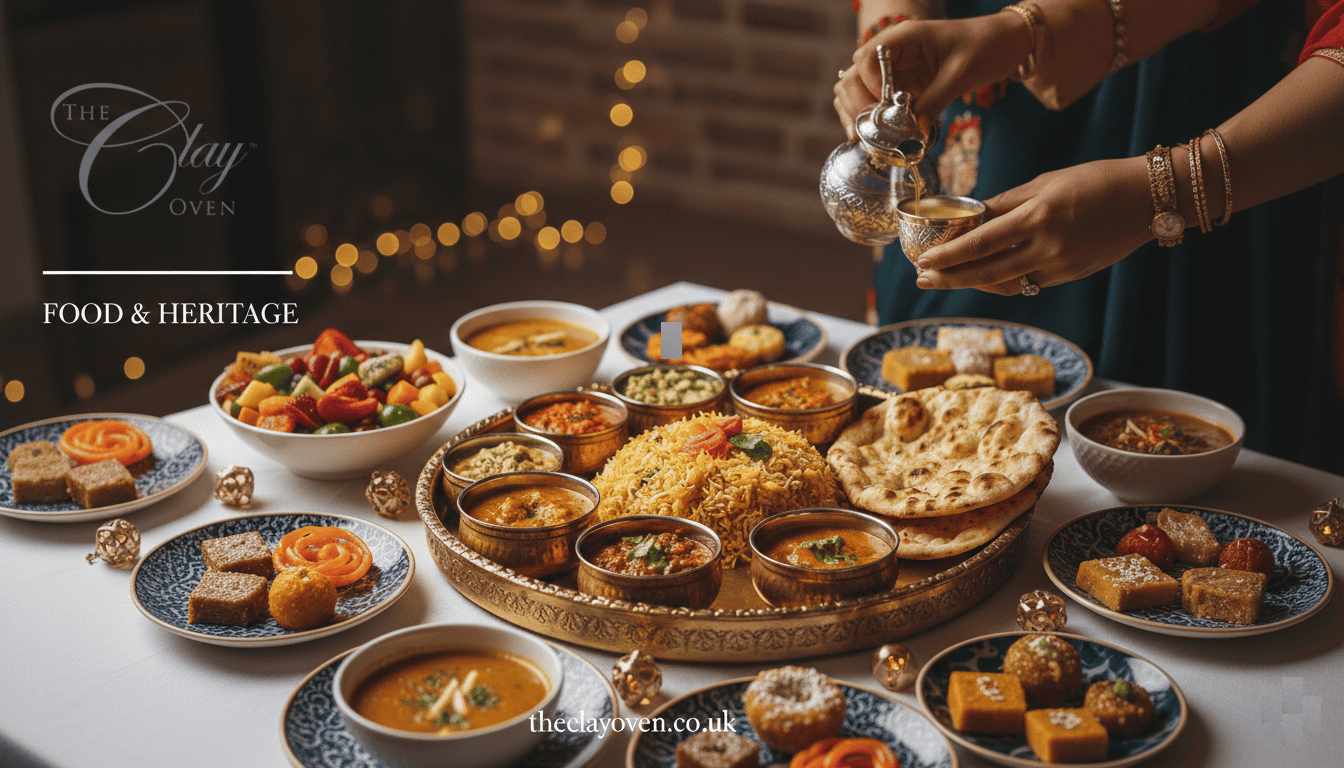
The Hidden Meaning Behind Asian Wedding Food Traditions (And Why Modern London Couples Are Honouring Them)
When British Asian couples plan their wedding menus with us at The Clay Oven, an interesting pattern emerges. The conversation typically begins with practical questions—how many dishes, which regional cuisine, buffet or plated service. Then, often prompted by a parent or grandparent’s comment, the discussion shifts to traditional foods that “should” be served at weddings. Suddenly, we’re discussing not just what tastes good but what various dishes symbolise, which foods bring good fortune, and how certain preparations honour cultural heritage.
These traditional food choices aren’t just quaint customs or elderly relatives being particular. They represent centuries of cultural meaning embedded in specific dishes, ingredients, and serving practices. Understanding these traditions—and deciding thoughtfully which ones matter to your specific celebration—creates menus that satisfy both palates and cultural significance. For British Asian couples navigating dual cultural identities, these food traditions offer tangible connections to heritage whilst creating modern celebrations in London.
Why Food Carries Symbolic Weight in Asian Weddings
Western wedding food traditions certainly exist—wedding cake, champagne toasts, specific meal courses. But Asian wedding food traditions often carry deeper symbolic meaning tied to religious beliefs, cultural values, and centuries-old practices that view food as more than sustenance.
Food as blessing and benediction: Many Asian cultures view serving specific foods at weddings as actively bestowing blessings on the couple. Sweet dishes represent wishes for a sweet life together. Certain preparations symbolise fertility, prosperity, longevity, or marital harmony. Serving these foods isn’t just feeding guests—it’s participating in cultural practices meant to influence the marriage’s future.
Ingredients as symbolic language: Individual ingredients carry meaning beyond flavour. Coconut in South Indian weddings represents fertility and prosperity. Almonds in many traditions symbolise good fortune. Turmeric-infused dishes connect to purification and auspiciousness. These aren’t arbitrary associations but meanings developed over centuries across Asian cultures.
Preparation methods matter spiritually: How food is prepared, not just what’s prepared, can carry significance. Certain dishes should be made by married women, specific preparations require particular techniques that honour tradition, and some foods must be cooked in prescribed ways to maintain their symbolic meaning.
Serving order follows cultural logic: The sequence in which wedding foods are presented often follows patterns with cultural or religious significance. This isn’t just about culinary flow but about honouring traditional meal structures that mark the wedding’s ceremonial progression.
For couples planning Asian weddings in London, these symbolic dimensions mean menu planning involves more than taste preferences and dietary requirements. It requires understanding which traditional elements genuinely matter to your families and community, which carry personal significance even if you’re not deeply traditional, and which might be safely modernised without causing cultural disconnection.
The Sweet Beginning: Why Mithai and Desserts Open Many Asian Celebrations
Western wedding meals typically conclude with desserts. Many Asian wedding traditions deliberately invert this, serving sweets early or throughout celebrations. Understanding this practice reveals deeper cultural values about what weddings should represent.
Symbolic sweetness sets the tone: Beginning with sweet foods symbolises starting married life with sweetness, joy, and positive energy. The cultural logic suggests that how a wedding begins influences how the marriage unfolds. Opening with sweets creates an optimistic, joyful foundation for everything that follows.
Hospitality expressed through immediate treats: Offering sweets immediately demonstrates the hosts’ commitment to generous hospitality. Guests shouldn’t wait hours for enjoyable food—the celebration’s sweetness should be evident from the moment they arrive.
Traditional Indian mithai carries specific meanings: Different traditional sweets symbolise various blessings. Ladoo, commonly served at Hindu weddings, represents good fortune and joy. Jalebi symbolises everlasting love through its intertwined spirals. Barfi represents purity and sweetness. Gulab jamun signifies the union of two souls. Serving these specific sweets isn’t just about taste—it’s about invoking particular blessings through culturally significant foods.
Practical hospitality during extended ceremonies: Asian weddings often involve lengthy ceremonies where guests arrive over extended periods. Serving sweets and light foods early ensures arriving guests have refreshment whilst waiting for full meal service.
At The Clay Oven, we regularly incorporate traditional mithai into wedding menus whilst also offering contemporary dessert options that appeal to diverse guest demographics. This dual approach honours tradition whilst acknowledging that not every guest understands or enjoys traditional sweets. Our speciality dessert menu includes both authentic preparations and modern interpretations that respect traditional flavours whilst presenting them in contemporary forms.
The Symbolism of Specific Dishes in Different Cultural Traditions
Each Asian culture associates particular dishes with weddings, creating region-specific food traditions that carry deep cultural meaning for families from those areas.
Punjabi wedding food traditions: Punjabi celebrations often feature specific dishes considered essential for wedding celebrations. Chicken curry prepared with elaborate spice blends symbolises abundance and flavour in married life. Choley (chickpeas) represent fertility and prosperity. Kadhi, the yoghurt-based curry, symbolises smooth adjustment and harmony between families. These aren’t menu options chosen casually—they’re culturally significant dishes that Punjabi families expect at proper wedding celebrations.
Gujarati wedding food significance: Traditional Gujarati weddings showcase predominantly vegetarian cuisine with specific symbolic dishes. Dhokla, the fermented chickpea flour preparation, represents transformation and new beginnings—fitting symbolism for marriage. Mohanthal, a rich sweet made from besan and ghee, symbolises prosperity and sweetness. Kadhi, prepared differently than Punjabi versions, represents life’s balance between sweet and savoury. Serving authentic Gujarati preparations at weddings honours not just regional cuisine but cultural values embedded in these dishes.
South Indian wedding food meanings: South Indian Hindu weddings feature specific foods that shouldn’t be omitted without careful thought. Payasam (sweet rice pudding) is considered absolutely essential, representing fertility, prosperity, and auspiciousness. Serving payasam isn’t optional at traditional South Indian weddings—it’s culturally mandatory. Similarly, banana leaves used for serving aren’t just eco-friendly choices but carry symbolic significance around purity and respect.
Bengali wedding food traditions: Bengali weddings place enormous cultural emphasis on fish preparations, particularly hilsa (ilish), considered the most auspicious fish. Serving mishti doi (sweet yoghurt) symbolises smooth beginnings and sweet life ahead. These aren’t arbitrary menu choices but foods carrying generations of cultural meaning for Bengali families.
Muslim wedding food significance: Halal preparations obviously have religious requirements, but specific dishes also carry cultural significance in Muslim wedding traditions. Biryani, particularly the elaborate dum-style preparations, represents celebration and abundance. The careful layering of rice and meat symbolises the careful building of married life. Sheer khurma or other sweet dishes represent life’s sweetness and Allah’s blessings.
For The Clay Oven, our experience with Punjabi, Gujarati, South Indian, and Sri Lankan menus means we understand these regional distinctions and can guide couples towards authentic preparations that honour their specific cultural backgrounds. We’re not offering generic “Indian wedding food” but regional specialities prepared with attention to cultural authenticity.
The Coconut Connection: Pan-Asian Symbolism in a Single Ingredient
Certain ingredients appear across multiple Asian wedding traditions with remarkably consistent symbolic meanings. Coconut exemplifies this pan-Asian significance, appearing in South Indian, Sri Lankan, Gujarati, and Bengali wedding foods with similar cultural associations.
Fertility and abundance symbolism: Coconut’s hard exterior protecting soft, nutritious interior symbolises protection and fertility across Asian cultures. The coconut’s water and flesh represent life-sustaining abundance. Including coconut in wedding foods invokes these associations for the couple’s future.
Purity and auspiciousness: Coconut’s white colour connects to purity across Hindu, Buddhist, and other Asian traditions. Breaking coconut during ceremonies or incorporating it into wedding foods marks auspicious beginnings.
Practical and spiritual duality: Coconut serves both practical culinary purposes (flavour, richness, texture) and spiritual symbolic functions. This duality makes it particularly valuable in wedding foods—it enhances dishes whilst carrying cultural meaning.
Regional variations on a common theme: South Indian wedding feasts might feature coconut chutney, coconut-infused curries, and coconut-based sweets. Gujarati weddings might incorporate coconut in different preparations but with similar symbolic associations. The specific dishes vary by region, but coconut’s cultural significance remains consistent.
At our events, we regularly incorporate coconut in various forms depending on the couple’s regional background. For South Indian weddings, this might mean coconut chutney served with dosa and idli preparations. For Gujarati celebrations, coconut appears in traditional sweets and specific vegetarian dishes. Understanding these regional variations whilst respecting coconut’s consistent symbolic significance helps us create menus that are both culturally appropriate and delicious.
Modern Adaptations: Honouring Tradition Without Rigid Replication
The most interesting conversations happen when British Asian couples try to balance traditional food expectations with their contemporary realities. They value their heritage and want to honour family, but they’re also modern Londoners with diverse friend groups, contemporary tastes, and desire for celebrations that feel authentic to who they are now, not just where their families originated.
Incorporating traditional dishes strategically: Rather than entire menus of traditional foods, many couples choose to include specific symbolically significant dishes whilst building broader menus around them. Perhaps payasam appears at a South Indian wedding alongside contemporary desserts. Maybe traditional mithai is served during arrival whilst the main meal includes both regional specialities and more widely accessible dishes.
Explaining significance to diverse guests: When traditional foods with cultural meaning are served, modern couples often provide explanations—menu cards describing symbolic significance, brief announcements explaining traditions, or event programmes noting why particular dishes were chosen. This honours tradition whilst including guests who might not understand the cultural context.
Fusion approaches that respect tradition: Some couples create fusion dishes that reference traditional foods whilst presenting them in contemporary forms. Perhaps traditional sweet flavours appear in modern dessert presentations. Maybe traditional spice combinations season contemporary preparations. These approaches maintain cultural connections whilst creating innovative dishes.
Prioritising culturally significant elements: Smart couples identify which traditional elements genuinely matter to them and their families versus which are just “how things are usually done.” Perhaps serving payasam is non-negotiable but the specific menu of regional dishes is flexible. Maybe including traditional mithai is essential but the dessert presentation can be modern.
Vegetarian tradition flexibility: Many Hindu and Jain wedding food traditions emphasise vegetarian preparations. Modern British Asian couples might maintain this tradition for specific ceremonial moments whilst incorporating non-vegetarian options for guests who prefer them, creating menus that respect tradition without imposing it universally.
At The Clay Oven, we specialise in exactly these conversations. Our four decades of experience mean we understand traditional expectations whilst also working with modern couples creating contemporary celebrations. We can prepare authentic traditional dishes that would satisfy the most traditional grandmother whilst also crafting innovative presentations that appeal to modern sensibilities.
The Dietary Restriction Overlay
Traditional food symbolism becomes more complex when overlaid with contemporary dietary requirements that previous generations didn’t navigate.
Religious dietary requirements intersect with tradition: Halal requirements for Muslim weddings, kosher considerations for certain families, Jain dietary restrictions excluding root vegetables and alliums—these religious requirements must be met whilst also honouring traditional food symbolism. This requires caterers who understand both cultural traditions and religious dietary laws.
Vegetarian versus vegan considerations: Traditional vegetarian dishes often rely heavily on dairy—ghee, paneer, yoghurt-based preparations. Modern vegans wanting to honour vegetarian traditions whilst avoiding dairy require significant menu adaptation. Our chefs regularly create vegan versions of traditionally dairy-heavy dishes that maintain cultural authenticity whilst meeting contemporary dietary choices.
Allergy accommodations within traditional dishes: Nut allergies become complex when traditional sweets often feature almonds, cashews, or pistachios for their symbolic significance. Gluten restrictions complicate wheat-based preparations. Professional caterers must maintain traditional dishes’ symbolic importance whilst creating safe alternatives for guests with restrictions.
Generational dietary differences: Elderly relatives might expect and consume traditional rich, heavy dishes that younger health-conscious guests find overwhelming. Modern menus often incorporate lighter versions of traditional dishes or provide options at various richness levels to accommodate different preferences and tolerances.
The key is recognising that dietary requirements don’t negate cultural traditions—they just require thoughtful adaptation. The symbolism of serving payasam at a South Indian wedding remains meaningful even if you’re offering both dairy and vegan versions. Traditional Punjabi dishes maintain their cultural significance whilst being prepared to accommodate gluten-free guests.
Why These Traditions Matter in Modern London
British Asian couples planning weddings in London exist in fascinating cultural space—firmly British whilst maintaining connections to family heritage, comfortable with contemporary life whilst respecting tradition, creating celebrations that honour multiple cultural influences simultaneously.
Food traditions become one arena where this dual cultural identity gets negotiated and expressed. A British Asian wedding menu at any of our London-area venues isn’t simply “what we want to eat.” It’s a statement about cultural identity, family respect, heritage honouring, and how couples navigate being simultaneously British and Asian.
Food as visible cultural marker: Wedding guests see and experience food directly. The menu choice signals how the couple relates to their heritage. Serving traditional foods with cultural significance demonstrates respect for and connection to cultural roots. This matters especially when extended family or community members might question how “traditional” thoroughly British-raised couples remain.
Intergenerational bridge building: Parents and grandparents often care deeply about traditional wedding food elements. Honouring these preferences—even when couples themselves might not fully embrace them—builds family harmony and respects elders’ cultural values. The wedding menu becomes one area where generations negotiate tradition and modernity.
Educating non-Asian guests: Many British Asian couples invite substantial numbers of non-Asian friends and colleagues. Serving traditional foods with explanation becomes an opportunity to share cultural heritage with people who might otherwise never encounter it. Food becomes educational whilst remaining delicious.
Creating cultural continuity: For British Asian couples starting their own families, the wedding represents the beginning of their generation’s cultural leadership. The food choices they make signal which traditions they’ll maintain for their children, which they’ll adapt, and which they’ll leave behind. This isn’t small decision-making—it’s cultural preservation and evolution happening in real-time.
Making Informed Choices About Traditional Wedding Foods
The key to successful incorporation of traditional food elements into modern Asian weddings isn’t blindly following everything traditional relatives suggest or completely rejecting all cultural practices. It’s making informed, thoughtful choices about which traditions genuinely matter to you, which honour your family appropriately, and which contribute to the celebration you actually want.
Start with understanding: Before deciding which traditional foods to include, understand what they actually symbolise and why they matter culturally. This knowledge helps you make choices based on genuine meaning rather than vague sense of “tradition.”
Identify your non-negotiables: What traditional elements truly matter to you or your family? Perhaps serving payasam at a South Indian wedding is absolutely essential. Maybe Gujarati dhokla must appear on the menu. Identifying these non-negotiable elements helps you build menus around them.
Choose quality over quantity: Rather than including every traditional dish possible, focus on preparing a smaller number of traditional items exceptionally well. One perfectly executed traditional sweet carries more cultural significance than five mediocre ones.
Communicate clearly with family: When you’re deviating from strictly traditional menus, explain your reasoning to family members who might be concerned. Often, when couples explain they’re honouring tradition selectively whilst creating inclusive celebrations, families respond with understanding.
Work with caterers who understand: This is where The Clay Oven’s four decades of experience with Asian wedding traditions becomes valuable. We understand not just how to cook regional dishes but why they’re served, what they symbolise, and how to incorporate them meaningfully into modern celebrations. Our teams can guide couples through these decisions rather than just executing whatever menu you specify.
The Clay Oven Approach to Traditional Food Elements
Our experience catering Asian weddings across London since 1983 means we’ve navigated countless conversations about traditional versus modern, authentic versus accessible, culturally significant versus personally preferred. We’ve developed approaches that honour tradition whilst creating contemporary celebrations.
Regional authenticity as foundation: Our menus for Punjabi, Gujarati, South Indian, and Sri Lankan weddings start from authentic regional preparations rather than generic “Indian food.” This ensures that when couples want traditional dishes, they’re receiving culturally accurate preparations that actually honour the traditions they’re trying to respect.
Flexible interpretation: We help couples identify where strict traditional adherence matters versus where thoughtful adaptation serves celebrations better. Perhaps the payasam must be absolutely traditional, but dessert presentations can be modern. Maybe traditional mithai is essential, but the serving method can be contemporary.
Educational support: We explain to couples what various traditional foods symbolise, helping them make informed choices. Many British Asian couples want to honour tradition but weren’t raised with detailed knowledge of every cultural food practice. Our expertise fills these knowledge gaps.
Quality without compromise: When we prepare traditional wedding foods, we maintain the same quality standards as any dish we serve. Traditional dishes aren’t afterthoughts or token gestures—they’re prepared with award-winning culinary expertise using authentic ingredients and proper techniques.
Integration not segregation: We incorporate traditional elements throughout menus rather than creating separate “traditional section” and “modern section.” This integration honours tradition whilst creating cohesive dining experiences.
The result is weddings where traditional food elements enhance rather than constrain celebrations, where cultural heritage gets honoured through thoughtful inclusion rather than rigid obligation, and where guests experience both delicious food and meaningful cultural traditions.
The Clay Oven has been honouring Asian wedding food traditions whilst creating modern celebrations across London since 1983. Our expertise with Punjabi, Gujarati, South Indian, and Sri Lankan cuisines allows us to incorporate traditional dishes with cultural significance alongside contemporary options that appeal to diverse guests. Whether you’re celebrating at our Wembley banqueting suites, Denham Grove’s Buckinghamshire estate, or Hunton Park’s Georgian mansion, we’ll help you navigate traditional food choices thoughtfully. Contact us at 020 8903 8800 to discuss how traditional elements can enhance your modern celebration.