


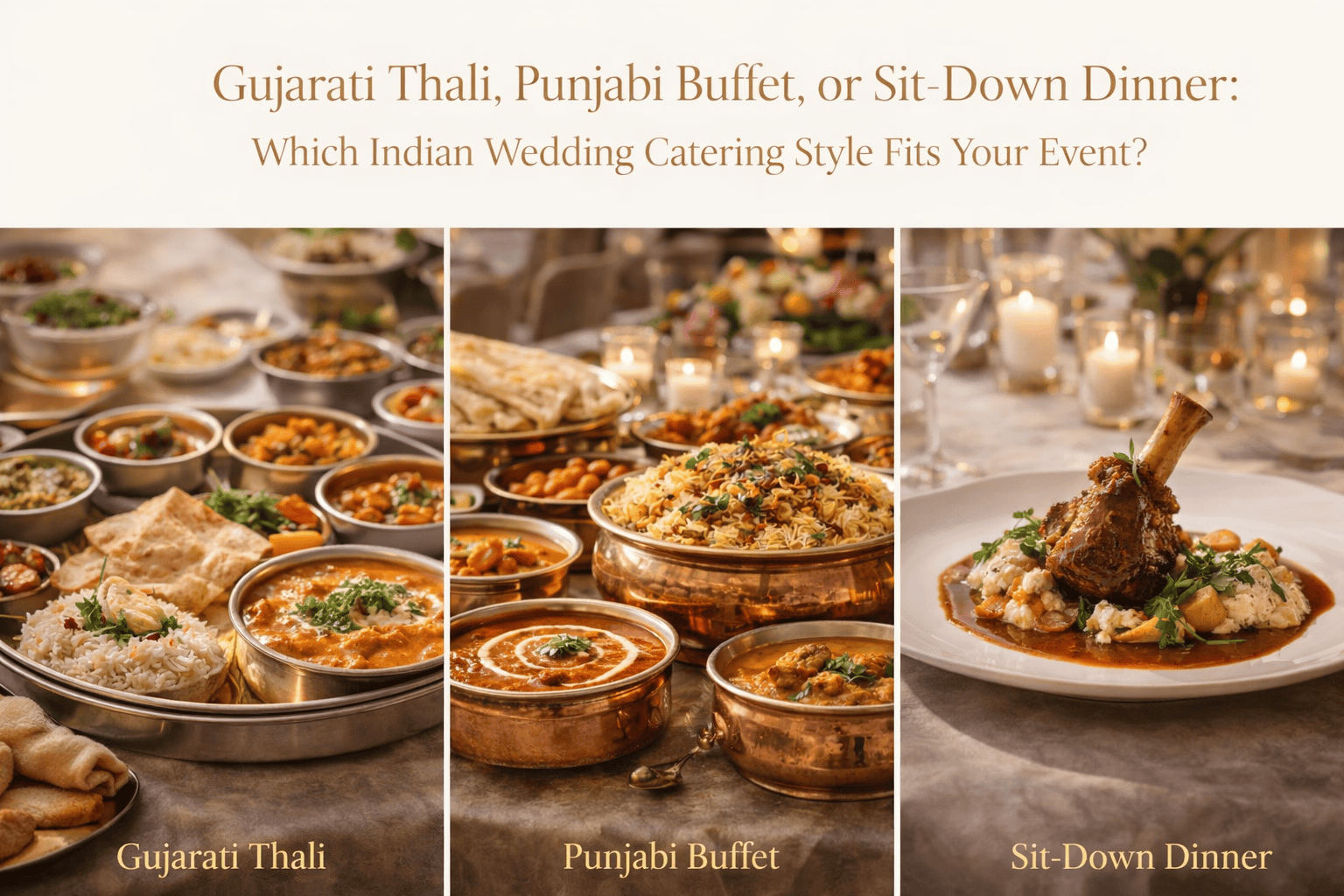
Gujarati Thali, Punjabi Buffet or Sit-Down Dinner: Which Indian Wedding Catering Style Fits Your Event?
When it comes to Indian wedding catering in the UK, the food is never just food. It is a statement of identity, a celebration of heritage, and — if we’re being completely honest — one of the most talked-about parts of your wedding day. Guests will remember the biryani long after the flowers have wilted and the wedding favours have been lost.
But here is the thing that catches many couples off guard: Indian wedding catering is not a single style. It is a vast, beautifully varied landscape shaped by region, religion, family tradition, and the kind of event you want to create. The catering format you choose — whether that is a traditional Gujarati thali, a lavish Punjabi buffet, or an elegant sit-down dinner — will shape not just the menu, but the entire mood and flow of your reception.
This guide is here to help you understand each style properly, so you can make a decision that feels right for your guests, your venue, and your vision.
The Gujarati Thali: Tradition, Abundance, and the Art of the Whole Plate
What Is a Gujarati Thali?
The word thali simply means plate, but in Gujarati culture it represents something far grander: a complete meal served simultaneously, where every flavour — sweet, salty, sour, bitter, spicy, and astringent — is present at once. Traditionally served on a large stainless steel platter with several small katoris (bowls), the Gujarati thali is a philosophy of eating as much as it is a format for serving.
At a wedding, this translates into a generous, structured spread where guests are seated and served a curated selection of dishes that arrive all at once, rather than in courses. It is immersive, communal, and deeply rooted in the culinary traditions of Gujarat and the broader Jain and Hindu communities that call the UK home.
What’s Typically on a Gujarati Wedding Thali?
A well-prepared Gujarati wedding thali will typically include:
Dal and Kadhi: A thin, warmly spiced lentil dal alongside kadhi — a tangy, yoghurt-based curry gently seasoned with fenugreek and ginger. These are the soul of any Gujarati meal.
Shaak (Vegetable Dishes): A selection of dry and wet sabzi, which might include Undhiyu (a slow-cooked mixed vegetable dish and a true Gujarati speciality), Bateta Nu Shaak (spiced potato curry), Paneer Masala, and seasonal vegetables cooked with the subtle, slightly sweet touch that distinguishes Gujarati cooking from its north Indian counterparts.
Rice and Rotli: Steamed white rice and soft, thin rotlis (chapattis), often accompanied by puris for special occasions. The bread is lighter and more delicate than Punjabi roti.
Farsan (Savoury Snacks and Starters): No Gujarati feast is complete without an array of farsan — think Dhokla (steamed fermented chickpea cake), Khandvi (rolled chickpea flour with tempered mustard seeds), Patra (colocasia leaves rolled with spiced chickpea batter), and an assortment of papdi and bhajia.
Chaat and Live Counters: Pani Puri, Bhel Puri, Dahi Puri, and Sev Puri stations are enormously popular at Gujarati weddings — both as arrival snacks and throughout the evening.
Mithai and Desserts: Gujarati sweets are a world unto themselves. Shrikand (strained yoghurt sweetened with saffron and cardamom), Gaajar Halwa, Gulab Jamun, Rasmalai, Jalebi, and Mohanthal (a rich gram flour sweet) are all traditional fixtures.
It is worth noting that traditional Gujarati catering is almost entirely vegetarian. Many families — particularly those with Jain observance — will also request that onion and garlic be omitted from certain dishes, which any experienced caterer will accommodate with care.
When Does a Gujarati Thali Work Best?
The Gujarati thali format is ideally suited to daytime wedding functions — particularly the wedding ceremony lunch — where a structured, seated meal creates a sense of occasion without the rowdiness of a buffet. It works beautifully at events of 100 to 400 guests and pairs naturally with Hindu wedding ceremonies where guests are already seated in a formal arrangement.
It is also a wonderful choice for families who want the food to be an authentic reflection of their Gujarati roots, especially when many guests are from the community and will immediately recognise and appreciate the quality of the dishes.
From a logistics perspective, the thali format requires more attentive service — waiters circulate continuously to refill katoris and offer seconds — so you will want to ensure your caterer has the staffing levels to deliver this well across a large guest count.
The Punjabi Buffet: Warmth, Generosity, and the Grand Spread
What Makes Punjabi Wedding Catering Distinctive?
If Gujarati food is elegant and nuanced, Punjabi food is bold, generous, and unapologetically full of flavour. Punjabi cooking from north India and the diaspora communities that have made the UK their home is defined by its use of rich masalas, generous amounts of ghee, tandoor-cooked breads and meats, and an ethos of hospitality that simply will not allow any guest to leave hungry.
The Punjabi buffet is the dominant format at Sikh and Hindu Punjabi weddings across the UK, and for good reason: it is perfectly designed to accommodate the large guest numbers, multi-generational crowds, and long, celebratory evenings that characterise these events. Whether you are hosting 200 guests at a banqueting suite in Wembley or 500 at a country estate in Hertfordshire, the Punjabi buffet scales beautifully.
What Does a Punjabi Wedding Buffet Include?
A classic Punjabi wedding buffet is a lavish affair, typically covering:
Tandoori Starters and Live Counters: The arrival experience at a Punjabi wedding is often defined by the sizzle of the tandoor. Seekh Kebabs, Chicken Tikka, Malai Tikka, Paneer Tikka, and Tandoori Lamb Chops are served fresh from the clay oven, alongside chaat stations offering Papdi Chaat, Gol Gappay, and Dahi Puri.
Main Courses — Vegetarian: Dal Makhani (slow-cooked black lentils in a butter and cream sauce — arguably the most iconic dish in North Indian cooking), Saag Paneer, Channa Masala, Aloo Gobi, Kadai Paneer, and seasonal sabzi dishes. For winter weddings, Sarson Da Saag served with Makki Di Roti is an unmissable addition.
Main Courses — Non-Vegetarian: Butter Chicken, Karahi Lamb, Lamb Rogan Josh, Chicken Korma, and Lamb Chops Masala are all staples. Biryani — whether chicken, lamb, or vegetable — is almost always the centrepiece of the buffet table, and its quality will be the single most discussed dish of the evening.
Breads: Freshly made Naan, Tandoori Roti, Peshwari Naan, and Paratha served hot from the tandoor. Nothing beats warm bread torn straight from the oven.
Rice: Jeera Rice, Vegetable Pulao, and the biryani itself.
Desserts: Gulab Jamun, Rasmalai, Gajar Halwa, Kulfi, Jalebi, and Kheer are the classics. Many families also include a dedicated mithai (sweet) counter or an elaborate dessert station.
Lassi: Both sweet and salted lassi should be considered non-negotiable at any self-respecting Punjabi wedding. It cleanses the palate, it is wonderfully refreshing, and it is deeply tied to the culture.
The Punjabi buffet is not just a serving format — it is an experience. Guests graze, return for seconds, linger at the live stations, and gather around the food in a way that encourages conversation and connection. It is catering as hospitality in its most generous form.
When Does a Punjabi Buffet Work Best?
The Punjabi buffet thrives at evening receptions, where the atmosphere is celebratory and guests are mingling freely. It is exceptionally well-suited to large weddings of 200 guests or more, and it offers the flexibility to accommodate vegetarians, non-vegetarians, and guests with varying appetites all at once.
It also works brilliantly across multiple-day events — a Mehndi night, a morning ceremony, and an evening reception can each have their own variation of the Punjabi buffet, adjusted in scale and formality to suit the occasion.
One important consideration: a Punjabi buffet requires expert management to ensure that dishes are replenished continuously, that live stations are well-staffed, and that the quality of food at 10pm is as good as it was at 7pm. This is where the experience of your catering team makes all the difference.
The Indian Sit-Down Dinner: Elegance, Occasion, and the Formal Feast
When Indian Wedding Catering Goes Formal
There is a growing appetite among UK couples — particularly those planning weddings at premium country house venues and five-star hotels — for a more structured, formally served Indian wedding dinner. Rather than a buffet where guests serve themselves, a sit-down Indian dinner brings the food to the table, course by course, with polished service and a carefully considered menu that reads almost like a fine-dining experience.
This is Indian wedding catering at its most refined: it combines the extraordinary depth of flavour that Indian cuisine offers with the elegance and occasion of a formal wedding breakfast.
How a Sit-Down Indian Wedding Menu is Structured
A well-constructed sit-down Indian wedding dinner typically flows through the following:
Welcome Canapes: Before guests are seated, a selection of beautifully presented canapes are served — think Mini Masala Dosa cups, Prawn Puri, Chilli Paneer Skewers, or tiny Seekh Kebab bites with a tamarind dipping sauce. These set the tone immediately and give guests something elegant to enjoy during the drinks reception.
Starter Course: A plated first course that might include a sharing chaat platter, an individually served Amritsari Fish with chutney, a Paneer Tikka with pickled vegetables, or a delicately spiced soup. The presentation here is key — this is the moment that signals to guests what kind of evening they are in for.
Intermediate Course or Palate Cleanser: Some couples opt for a small sorbet or a light salad course between starter and main, particularly at longer, more formal dinners.
Main Course: Typically two or three main dishes served simultaneously — perhaps a rich Lamb Rogan Josh, a creamy Dal Makhani, a Paneer dish, and a seasonal vegetable curry — accompanied by freshly baked Naan or Roti and fragrant Basmati rice or Biryani. The difference from a buffet is in the presentation: plated or served at the table by attentive waiting staff, with clean crockery and precise portioning.
Dessert: An individual plated dessert — Gulab Jamun with rose ice cream, a Saffron Panna Cotta, a Chocolate Barfi, or a classic Rasmalai — brings the meal to a formal close. Many couples are now creating imaginative fusion desserts that bring together Indian flavours and contemporary patisserie techniques.
The sit-down format changes the atmosphere of a wedding reception significantly. Guests are seated together, conversations flow around the table, and the meal becomes a shared moment rather than an individual experience. For couples who want their food to feel like part of the ceremony, not just a practical necessity, this is the format to consider.
When Does a Sit-Down Indian Dinner Work Best?
The sit-down format is best suited to intimate to medium-sized weddings — broadly up to around 200 or 250 guests — where the logistics of plated service are manageable and the venue supports a formal dinner setting. It works particularly well at country house hotels and estate venues, where the space, the aesthetics, and the ethos naturally lend themselves to an elegant seated meal.
It is also a strong choice for intercultural weddings, where one side of the family may be less familiar with Indian food and a more guided, structured dining experience helps everyone feel comfortable. A thoughtfully written menu card that explains each dish goes a long way.
The key challenge with a sit-down Indian wedding dinner is execution: keeping food at the correct temperature across a large room, ensuring simultaneous plating, and maintaining the quality of fragrant, spiced dishes under warm service conditions all require an extremely experienced catering team.
So — Which Catering Style is Right for Your Wedding?
The honest answer is that there is no single right choice. The right style depends on the nature of your event, the composition of your guest list, your venue, your cultural background, and — ultimately — the kind of atmosphere you want to create. Here is a simple way to think about it:
Choose a Gujarati Thali if…
Your family is from the Gujarati community and authenticity is important to you. You are hosting a daytime ceremony meal. Your guests are predominantly vegetarian. You want a structured, communal dining experience that connects deeply with tradition. You value every flavour — sweet, sour, savoury — arriving on the plate simultaneously.
Choose a Punjabi Buffet if…
You are hosting a large evening reception of 200 guests or more. You want a relaxed, sociable atmosphere where guests can mingle freely. Your guest list is mixed — both vegetarians and non-vegetarians — and you want to cater generously to everyone. You love live stations, fresh-from-the-tandoor starters, and the sense of theatre that comes with a great spread. You want your catering to feel warm, generous, and celebratory.
Choose a Sit-Down Indian Dinner if…
You are hosting a smaller, more intimate wedding of up to 200 to 250 guests. You are getting married at a premium venue — a country house, hotel, or estate — where a formal dinner fits the setting. You want an elegant, refined dining experience that reflects the sophistication of Indian cuisine at its best. You are planning an intercultural wedding and want to create a guided experience for guests who may be less familiar with Indian food.
Of course, many of the best Indian wedding receptions blend elements of all three. A Gujarati thali for the ceremony lunch, a Punjabi buffet for the evening reception, and a midnight feast of freshly made kathi rolls and kulfi — that is a wedding people talk about for years.
Planning Indian Wedding Catering in the UK: A Few Final Thoughts
Whatever format you choose, there are a few things that will make or break the catering at your Indian wedding.
Book early. The best Indian wedding caterers in the UK — those with the chefs, the staffing levels, and the experience to deliver at scale — are booked up well in advance, particularly for the peak wedding season between April and October. If you are planning a Sikh or Hindu wedding at a popular venue in London, the Home Counties, or the Midlands, do not leave your catering enquiry until six months before the date.
Attend a food tasting. This is non-negotiable. No matter how impressive a caterer’s reputation, you should taste the food before you sign. A food tasting session allows you to assess the quality of the dishes, request adjustments to spice levels or portion sizes, and confirm that the caterer genuinely understands your community’s cuisine rather than offering a generic approximation of it.
Be clear about dietary requirements. Indian wedding guest lists are often wonderfully diverse — you may have devout Jains who avoid root vegetables, guests who follow a Sattvic diet, guests requiring halal-certified meat, and guests with specific allergen requirements. A good caterer will take all of this seriously and build it into the menu from the start.
Think about the flow of the day. The best Indian wedding catering does not just consider what is on the menu — it considers when and how the food arrives. Arrival chaat and starters should be flowing before guests start getting restless. The main buffet or sit-down meal should be timed around the speeches and first dances, not competing with them. Late-night snacks — a simple but brilliant touch — give guests something to look forward to on the dance floor.
Trust your caterer’s expertise. The finest Indian wedding caterers in the UK have decades of experience. They know how many portions of Dal Makhani you need for 350 guests. They know how to keep Tandoori Chicken crispy when it is being held for service. They know when the biryani needs to be sealed and rested. Trust their guidance — and ask plenty of questions to make sure they have earned that trust.
Celebrate with The Clay Oven
At The Clay Oven, we have been crafting exceptional Indian wedding catering across the UK for over 40 years.
From traditional Gujarati thalis and grand Punjabi buffets to refined sit-down dinners at our venues in Wembley, Denham Grove, and Hunton Park — we bring the full breadth of Indian culinary tradition to your most important day.
Get in touch to arrange your food tasting: 020 8903 8800 | [email protected] | theclayoven.co.uk
© The Clay Oven 2026 | Indian Wedding Caterers London | Asian Wedding Catering UK | Halal Catering | Gujarati Thali | Punjabi Buffet | Sit-Down Wedding Dinner