


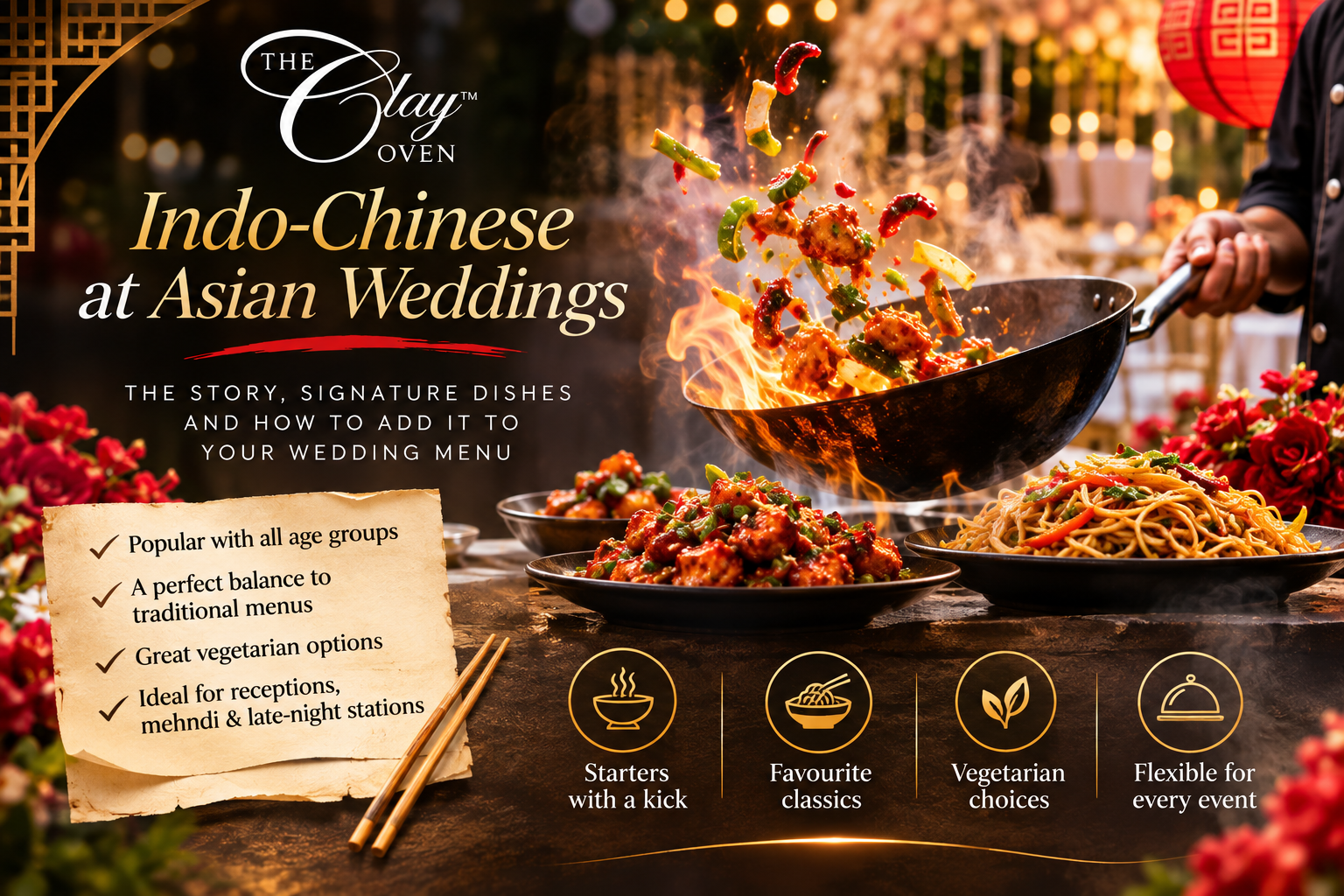
Indo-Chinese Wedding Catering in London: How Manchurian, Hakka Noodles and Chilli Paneer Became Reception Favourites
Order chilli paneer in Beijing and you’ll get a blank look. Order it in Wembley and it’s on half the starter lists in the borough.
Indo-Chinese food belongs to neither country and to both. It’s now so familiar at Asian weddings, parties and family gatherings that many guests would be surprised not to see it. This guide covers where it comes from, what the main dishes are, and how to fit them into a wedding menu without overloading it.
Where Indo-Chinese food comes from
The cuisine grew out of Kolkata, where Chinese families, many of them Hakka, settled and opened restaurants and small kitchens. They cooked with soy, garlic, ginger and chilli, but adapted their dishes to local tastes, adding more heat, more sauce and more crunch. That’s where Hakka noodles get their name.
One of its best-known dishes, Chicken Manchurian, is widely credited to a chef in Mumbai in the 1970s. From there the style spread across India and then to the UK with the diaspora, where it became a staple of Indian restaurants, takeaways and party menus.
Why it works at weddings
It brings the table together. Teenagers, children and guests who find tandoori food too heavy will often head straight for the noodles and Manchurian.
It contrasts with the rest of the menu. After butter chicken, dal makhani and tandoori starters, something sharp, garlicky and crunchy wakes up the palate.
It suits vegetarians. Gobi 65, Gobi Manchurian and Veg Manchurian give vegetarian guests starters with real punch.
It’s a good late-night snack. Noodles and fried rice are easy to eat standing up, which makes them a natural fit for the dance floor.
The Clay Oven’s Indo-Chinese menu, decoded
Here’s what’s on our Indo-Chinese menu and what each dish is like.
Chicken Lollypop: chicken wing pieces shaped like lollipops, fried and coated in a spicy sauce. Easy to hold and popular as a starter.
Chicken Manchurian: fried chicken in a dark, garlicky, soy-based sauce. A classic.
Chilli Chicken: crisp chicken tossed with chillies, peppers and onion. Sharper and drier than Manchurian.
Drums of Heaven: chicken wing pieces in a spiced sauce, long loved at Indian-Chinese restaurants.
Thai Sesame Chicken: sesame-coated chicken with a lighter, sweeter flavour. A good option for guests who want less heat.
Veg Manchurian: vegetable dumplings in the same sauce as the chicken version.
Gobi 65: crisp fried cauliflower, spiced and fiery. A favourite starter.
Gobi Manchurian: cauliflower in Manchurian sauce, a staple vegetarian dish.
Hakka Noodles: wok-tossed noodles with vegetables, a good side for the richer dishes.
Fried Rice (veg and non-veg): a familiar, filling option.
Sweetcorn Soup (veg and non-veg): a light, warming starter for winter weddings.
You’ll find the same flavours on other menus too. Chilli Paneer, Chilli Soya and Chilli Mogo are on our canapés menu, and Chilli Paneer with Lettuce and Chilli Mogo have appeared at our Diwali and Christmas events.
Where it fits in a wedding
- Reception starters, alongside tandoori kebabs and chaat
- Canapés on arrival, such as chilli paneer or chilli mogo
- A late-night station, with noodles and fried rice
- Mehndi and sangeet nights, where younger guests tend to graze
- Corporate and birthday parties with a mixed group
How to balance a menu with Indo-Chinese dishes
- Pick one or two starters, not five. One chicken, one vegetarian is plenty.
- Add a carbohydrate. Hakka noodles or fried rice makes it feel like a proper dish, not only a snack.
- Watch the heat. If your tandoori starters are spicy, choose something milder like Thai Sesame Chicken.
- Offer a cooling accompaniment. Raita and salad balance a chilli-heavy plate.
- Match it to the event. Dry dishes such as Gobi 65 and Chilli Chicken suit standing receptions, while soups and noodles suit winter and evening events.
Dietary notes
- Allergens: Indo-Chinese sauces often contain soy, wheat and sesame, and some dishes use nuts. Tell your caterer about any allergies early.
- Jain guests: Many of these dishes use garlic and onion. Our [Jain wedding catering guide] explains what that means for your menu.
- Halal requirements: Ask how the sauces are made, since some Chinese-style sauces can contain ingredients that aren’t halal.
Three sample combinations
A reception starter table: Gobi 65 · Chicken Lollypop · Chilli Paneer · Hakka Noodles
A winter wedding: Sweetcorn Soup · Veg Manchurian · Fried Rice
A late-night dance floor station: Hakka Noodles · Chilli Chicken · Gobi Manchurian
Frequently asked questions
What is Indo-Chinese food?
A cuisine that grew out of Kolkata’s Chinese community, blending Chinese techniques with Indian flavours and spice levels.
What Indo-Chinese dishes does The Clay Oven offer?
Chicken Lollypop, Chicken Manchurian, Chilli Chicken, Drums of Heaven, Thai Sesame Chicken, Veg Manchurian, Gobi 65, Gobi Manchurian, Hakka Noodles, fried rice and sweetcorn soup.
Are there vegetarian options?
Yes: Gobi 65, Gobi Manchurian, Veg Manchurian, vegetable fried rice, Hakka noodles and veg sweetcorn soup.
Can Indo-Chinese dishes be served as canapés?
Yes. Our canapés menu includes Chilli Paneer, Chilli Soya and Chilli Mogo.
How do I plan a menu?
Call 020 8903 8800 or visit theclayoven.co.uk to arrange a tasting.
The Clay Oven has been catering Asian weddings across London and the Home Counties since 1983. To add Indo-Chinese dishes to your menu, call 020 8903 8800 or visit theclayoven.co.uk.