


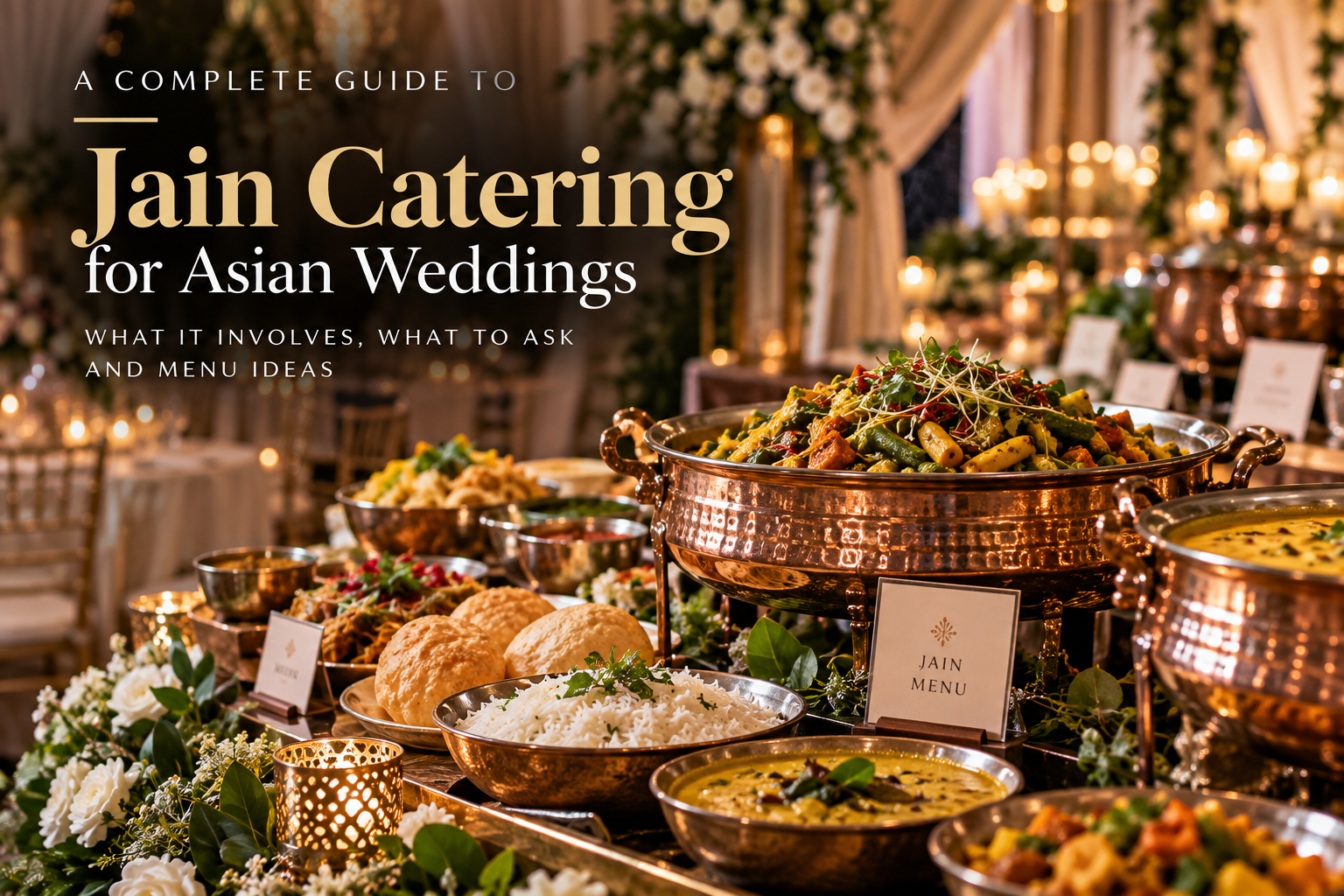
Jain Wedding Catering in the UK: What No Onion, No Garlic and No Root Vegetables Actually Means for Your Menu
Ask most caterers about Jain requirements and you’ll hear the same shorthand: “vegetarian, no onion or garlic.” It’s a starting point, but it isn’t the full picture, and treating it as the whole picture is where things go wrong.
Jain dietary practice is among the most precise of any community in the UK, and a wedding brings together family, elders and guests who may each observe it differently. This guide explains what Jain catering typically involves, why the rules exist, and what to ask your caterer so the food is right for everyone at the table.
Why Jain Food Is Different
Jain food practice comes from ahimsa, the principle of non-violence. It extends beyond avoiding meat to minimising harm to all living things, including the tiny organisms in soil and the plants themselves. This is why root vegetables, which are pulled from the ground and destroy the plant, are avoided.
One important point before anything else: practice varies between sects, communities and individual families. Some are more strict than others, and the rules can differ around specific ingredients. The best approach is never to assume. Ask the family what they observe, and if needed, ask them to confirm with their elders or community leaders.
What Is Commonly Avoided
While details vary, Jain menus typically exclude:
- Meat, fish and eggs, without exception in Jain households
- Onion and garlic
- Potatoes and other root vegetables, such as carrots, radish and beetroot
- Fresh ginger in many families, with dried ginger powder used instead
Many families also avoid honey, and some avoid certain fermented foods or particular ingredients. This is where a conversation with the family matters far more than a generic checklist.
To replace the flavour of onion and garlic, Jain cooking typically relies on asafoetida (hing), cumin, mustard seeds, curry leaves, coriander, green chilli, dried ginger and tomato-based or yoghurt-based bases. Done well, the food is deeply flavoured, not bland.
The Sunset Rule: Why Timing Matters
Many observant Jains do not eat after sunset. In the UK, that’s a real planning issue. In summer, sunset can be after 9pm, but in winter it can fall around 4pm.
For a wedding, this affects when the main meal is served. Families may prefer a lunchtime meal, or an evening meal timed to finish before sunset. If your celebration runs into the evening, ask your caterer how service can be planned around it, and whether guests who observe the rule can be served earlier.
The Hidden Ingredients Problem
Most mistakes in Jain catering don’t come from the obvious dishes. They come from hidden ingredients.
Ready-made spice blends, curry pastes, stocks, sauces, chutneys, papads and packaged snacks can all contain onion or garlic. A dish that looks compliant may not be.
Ask your caterer how they check ingredients, and whether Jain dishes are prepared with individually sourced, checked components rather than shared bases.
Kitchen Practice and Cross-Contamination
For many Jain guests, it matters not only what’s on the plate but how it was prepared. Ask whether Jain dishes are cooked separately from onion- and garlic-containing dishes, and whether separate utensils, serving spoons and service points will be used.
If your caterer can’t explain how this works in practice, that’s worth knowing before you book.
Menu Ideas for a Jain Wedding
Jain menus can be generous and varied. Typical dishes include:
Starters and snacks: khandvi, Jain-style chaat made without potato and with garlic-free chutneys, pani puri with jeera water, and vegetable or paneer tikka using permitted ingredients.
Mains: dal, kadhi, paneer dishes cooked with hing and cumin, and seasonal above-ground vegetables such as beans, gourds, okra and peas.
Rice and breads: plain or jeera rice, pulao without onion, puri, rotli, thepla and khichdi.
Live stations: a Jain-style pav bhaji, made with vegetables other than potato, is a popular way to include a familiar street food favourite.
Desserts: shrikhand, sheera, jalebi, mohanthal and kheer.
Always confirm individual ingredients with the family before finalising anything.
Mixed Guest Lists: Two Approaches
Many weddings include both Jain and non-Jain guests. There are two main ways to handle it:
- A fully Jain-friendly menu for the whole event. This keeps everything simple, avoids cross-contamination and makes every guest equal at the table.
- A dedicated Jain counter or section within a wider menu, clearly labelled and prepared separately.
The first is more straightforward. The second offers more variety but needs careful kitchen and service planning. Whichever you choose, clear labelling makes a real difference.
Questions to Ask Your Caterer
- What’s your experience catering Jain weddings?
- How do you check that spice blends, sauces and chutneys contain no onion or garlic?
- Will Jain dishes be prepared separately, with their own utensils?
- Can service timings work around sunset?
- How will Jain dishes be labelled at the buffet?
- Can we taste the Jain menu at the tasting session?
Getting It Right
For a Jain family, wedding food is about more than taste. It’s about values, and about being able to eat freely at your own celebration without wondering what’s in the dish. The best catering for a Jain wedding comes from asking detailed questions early, being clear about what your family observes, and choosing a caterer who listens.
The Clay Oven has been catering Gujarati and Asian weddings from Wembley for over forty years. If Jain requirements are part of your celebration, it’s a conversation worth having at the very start. Call us on 020 8903 8800 or visit theclayoven.co.uk.