


12 Live Catering Stations That Will Have Your Wedding Guests Posting All Night
12 Live Catering Stations That Will Have Your Wedding Guests Posting All Night
Live catering stations turn a wedding buffet from something guests queue for into something they actually stop and watch — a chef opening a biryani handi, dough blistering on a tandoor wall, cream freezing into rolled ice cream in front of them. That’s the difference between food guests eat and food guests photograph, and it’s why live stations have become one of the most requested additions to Asian weddings in the UK.
Here are 12 of the most popular stations right now, what makes each one work, and how to think about choosing between them.
1. Pani Puri & Chaat Station
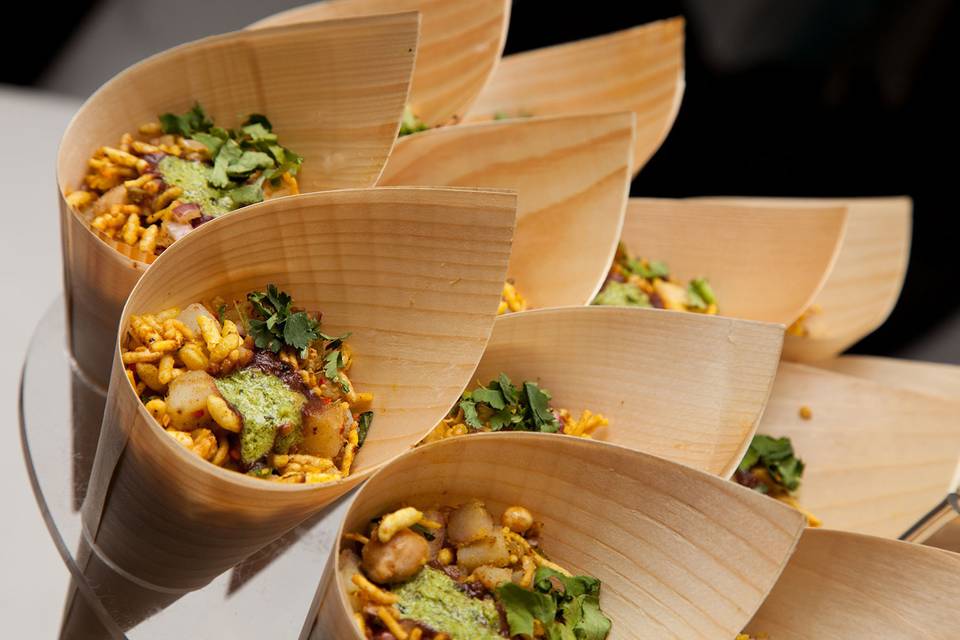
The most requested live station at almost every South Asian wedding, and for good reason. A chef fills crisp puris to order with spiced water, tamarind chutney and potato, so nothing sits soggy on a buffet the way it would if it were pre-plated. It’s fast, it’s interactive, and there’s a genuine skill on display in how quickly a good chaat chef can move.
2. Dosa Station
A hot griddle, batter spreading into a thin, crisp circle, the smell drifting across the room before anyone’s even queued. Dosa stations work particularly well for South Indian weddings, but they’ve become a firm favourite as a late-night station at weddings of every background, when guests want something warm before the night winds down.
3. Tandoor & Kebab Station
There’s a reason a live tandoor draws a crowd — the heat, the flames, the seekh kebabs and naan cooked right in front of guests rather than arriving from a chafing dish. It has genuine theatre to it, and the char you get from a live tandoor simply isn’t something you can replicate any other way.
4. Live Biryani Station
A large handi opened at the station, the seal breaking, steam and aroma rolling out as the rice and meat are layered onto the plate. It’s one of the better moments of a wedding buffet to watch, let alone eat, and it turns a dish guests already love into a genuine event.
5. Indo-Chinese Wok Station
High heat, fast hands, and the unmistakable sound and smell of a wok being tossed — Hakka noodles, chilli paneer or Manchurian cooked to order rather than sat in a tray. It’s become a staple at modern Indian weddings, especially for a Sangeet or a later crowd looking for something different from the rest of the spread.
6. Live Naan & Roti Station
Watching dough go from a ball in someone’s hand to a blistered naan pulled from the tandoor wall in under a minute is oddly hypnotic to watch, and it means every naan reaches a plate hot rather than steamed in a basket. It pairs naturally alongside a tandoor and kebab station if you’re combining the two.
7. Paan Station
A classic close to a South Asian wedding, and one that’s come back into fashion as couples look for details that feel genuinely rooted rather than generic. A paan-wallah preparing betel leaf parcels to order gives older guests something familiar and gives younger guests something most of them have never actually watched being made.
8. Kulfi & Falooda Bar
A dessert station built around kulfi, falooda and rabri, often with guests choosing their own toppings and syrups as it’s assembled. The layered glasses photograph beautifully, and it gives your dessert table an interactive alternative or addition to a static mithai counter.
9. Rolled Ice Cream Station
Cream poured onto a frozen plate, worked into thin sheets, and rolled into curls right in front of guests — this has become one of the most photographed and filmed stations at UK weddings over the last few years, particularly with a younger guest list. It’s less traditional than the rest of this list, but it consistently draws a crowd and a queue of phones.
10. Chocolate & Dessert Fountain
A reliable, lower-key crowd-pleaser — warm chocolate cascading over tiers, with fruit, marshmallows and biscuits for dipping. It doesn’t have the same drama as a live tandoor or biryani station, but it’s an easy, familiar addition that guests of every age enjoy.
11. Late-Night Street Food Counter
As the evening winds down and the dancing has been going for hours, a late-night station — bun kebabs, wraps, or a simplified chaat selection — gives guests something to eat before they head home. It’s often the station people remember most fondly the next morning, precisely because it caught them at exactly the right moment.
12. Mocktail & Sherbet Bar
Fresh drinks made to order — rose sherbet, jaljeera, fresh lime soda, mango lassi — rather than pre-batched and left to sit. It gives the evening a proper bar-like energy without needing an alcohol licence, which matters for many South Asian weddings where alcohol isn’t served, and it’s an easy station to make visually striking with the right glassware and garnish.
How many stations should your wedding actually have?
More stations doesn’t automatically mean a better evening. Two or three well-run stations, matched to the mood of the specific event, tend to land far better than five or six competing for the same space and the same crowd’s attention. A lighter, more casual event like a Mehndi suits a chaat or paan station well; a Baraat or reception can carry the weight of a tandoor or biryani station. Spread guests across too many stations at once and you end up with several half-formed queues instead of a handful of genuinely memorable moments.
How to choose the right stations for your wedding
A few things worth thinking through before you finalise your list:
- What’s the moment you want to create? A live station works best when it matches the energy of that part of the day — interactive and casual earlier on, warming and comforting later at night.
- Where will it physically sit? A station with an open flame or hot equipment needs proper space and ventilation, which matters more at an indoor venue than an outdoor marquee.
- Does it suit your guest list? A paan station lands differently depending on the age and background of your crowd — know your room before you book it.
- Will it be genuinely staffed, or an afterthought? A live station is only as good as the chef running it. Ask your caterer who’s actually cooking at each station, not just what’s on the list.
Frequently asked questions
What’s the most popular live catering station at Indian weddings? Pani puri and chaat stations are consistently the most requested, largely because they’re fast, interactive, and suit both a casual Mehndi and a formal reception equally well.
How many live stations should a wedding have? Most weddings work best with two or three well-run live stations rather than five or six, since spreading guests across too many stations at once creates multiple half-formed queues instead of a few genuinely memorable moments.
Are live stations only suitable for certain types of weddings? No — live stations work across Mehndi, Baraat, Walima and reception events, but the right station changes with the mood. Lighter, faster stations suit a casual Mehndi, while a tandoor or biryani station carries the weight of a bigger, more formal event.
What should I ask a caterer before booking a live station? Ask who’s actually running the station on the day, what space and setup it needs at your venue, and how it fits alongside your core menu rather than competing with it for kitchen resources.
Want to talk through which live stations would genuinely suit your wedding and venue? The Clay Oven runs live stations at events of every size, and we’ll walk you through what works best for your guest list and space. Get in touch to talk through your menu.