


How Many Dishes Should Be on an Asian Wedding Menu? (And Why More Isn’t Better)
Most well-run Asian weddings serve between 8 and 12 dishes per event — a couple of starters, three or four mains, two or three accompaniments, and a dessert — rather than the 20-plus item menus couples often feel pressured to book. A tighter menu means every dish arrives hot, well-cooked and properly staffed, which guests remember far more than sheer volume ever does.
The instinct to over-order, and why it happens
Almost every couple starts wedding planning with the same feeling: more choice equals more generosity. If Auntie’s wedding had 18 dishes, yours should have 20. It’s an understandable instinct — food is how Asian families show love, and nobody wants to be the couple whose reception felt “thin.”
But there’s a difference between generosity and volume. A guest doesn’t remember that there were 20 dishes on the buffet. They remember that the biryani was properly cooked, the curry was hot, and they didn’t queue for fifteen minutes behind someone deciding between three near-identical paneer dishes. Once you’ve eaten at enough weddings, you start to notice that the ones people talk about afterwards are rarely the ones with the longest menu.
What a well-balanced wedding menu actually looks like
For a single event — a reception or Baraat, say — a menu built around 8 to 12 dishes tends to hit the right balance of choice and quality:
- 2–3 starters (one vegetarian, one non-vegetarian, one lighter option like a chaat)
- 3–4 mains (a mix of dry and gravy-based dishes, covering chicken, lamb or fish, and a strong vegetarian centrepiece — not an afterthought)
- 2–3 accompaniments (rice, dal, a bread, a raita or salad)
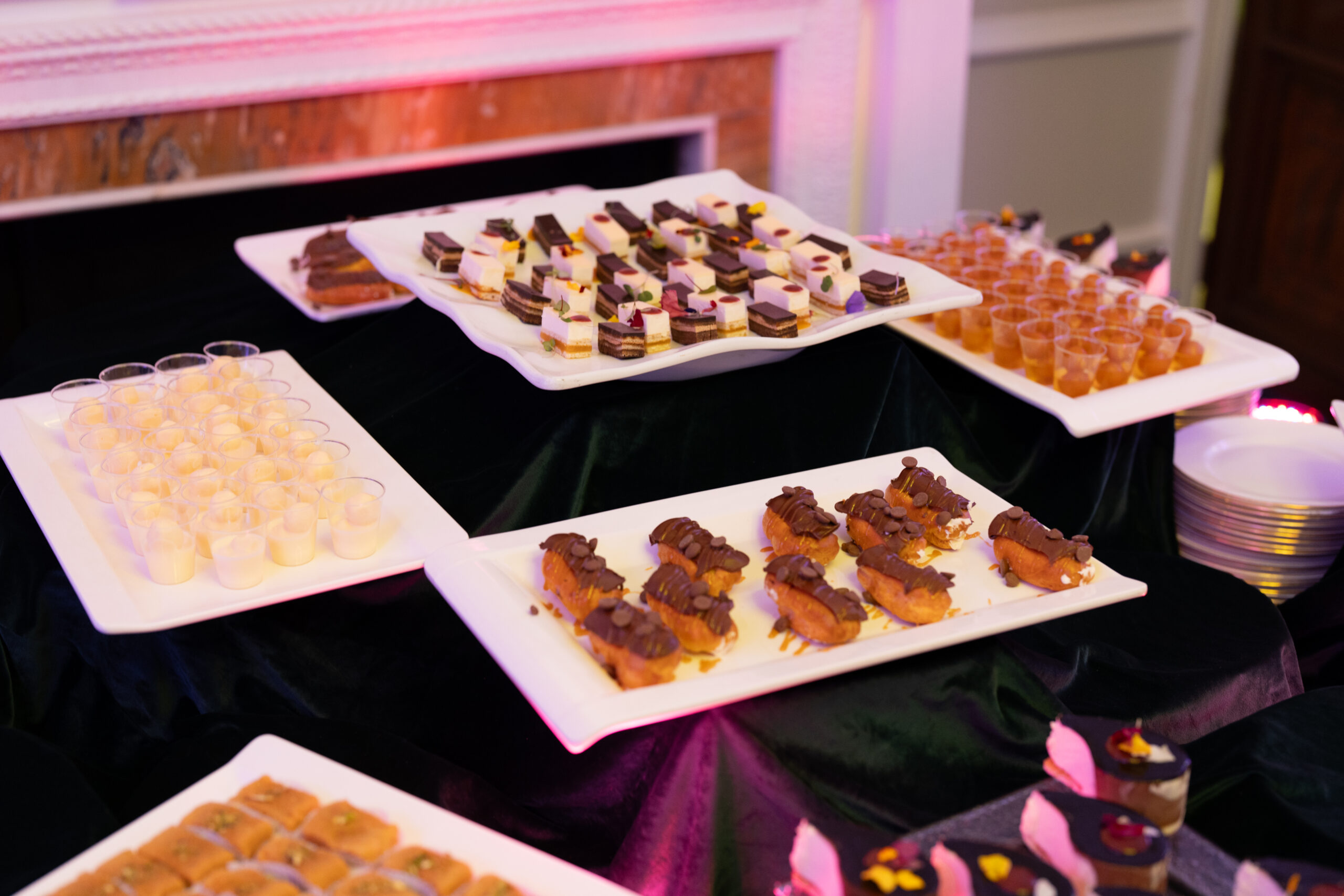
- 1–2 desserts (a mithai selection plus something like gulab jamun or kulfi)
That’s a menu a kitchen can execute properly for 300 or 500 guests without every dish suffering. Add a live station or two — a chaat counter, a dosa station, a tandoor — and you get variety and theatre without stretching the core menu any further.
Why more dishes means more risk, not more value
Every extra dish you add to a wedding menu isn’t just an extra line item — it’s extra prep time, extra chafing dishes competing for space on the buffet, and extra staff needed to keep everything hot and replenished. Kitchens that are asked to deliver 20+ dishes at scale are almost always making a trade-off somewhere, even if they don’t say so upfront.
The most common consequences of an overloaded menu:
Food quality drops. A kitchen has a finite number of skilled hands and a finite amount of hob and oven space. Spread that across too many dishes and something gives — usually consistency. The tandoori chicken might be perfect and the fish curry might arrive lukewarm because it was the eighth dish being finished at once.
Buffet lines slow down. More dishes mean more decisions, more serving points needed, and more time each guest spends at the buffet. On a 300-guest reception, that’s the difference between a smooth 45-minute service and a queue that’s still moving when the speeches are meant to start.
Waste goes up. Caterers have to prepare enough of every dish to avoid running out, which means a menu with 20 items typically produces far more leftover food than one with 12 well-chosen dishes — food that’s been cooked, staffed and paid for, and then binned.
Nothing gets to be the highlight. A menu that tries to be everything to everyone often ends up being memorable for nothing. A tighter menu lets two or three standout dishes — the ones your family is genuinely known for, or the ones the groom’s side has been asking about — actually stand out.
How many dishes per event, if you’re doing more than one
Asian weddings are rarely a single meal, and the right dish count changes depending on the event:
- Mehndi: Lighter and more casual. 6–8 dishes, often street-food style — chaat, kebabs, a couple of curries, and a live station or two work better here than a full sit-down spread.
- Baraat / Sangeet: A fuller menu, typically 10–12 dishes, since this is often the biggest and most celebratory meal.
- Walima / Reception: Slightly more formal, 8–10 dishes, sometimes plated rather than buffet, with the desserts given more focus.
Planning these as one connected menu — rather than three separate bookings — is what stops guests attending every event from eating the same biryani three days running, and it’s usually where a good caterer earns their fee.
The exception: live stations add variety without adding dishes
If you want the feeling of abundance without the drawbacks of an overstuffed menu, live cooking stations are the better lever to pull. A dosa station, a chaat counter, or a kulfi and falooda bar gives guests something interactive and memorable, adds genuine variety to the evening, and doesn’t compete with the core menu for kitchen bandwidth in the same way a fifth curry would. Two or three well-run stations usually do more for guest experience than four extra buffet dishes ever will.
How to choose which dishes make the cut
When you’re narrowing a menu down, a few questions help more than instinct alone:
- Which dishes does your family actually make well and serve proudly at home — not just what’s “expected” at a wedding?
- Is there a genuine vegetarian centrepiece, or is it a side thought bolted on for guests with dietary needs?
- Does every dish serve a different texture or flavour role, or are two dishes doing the same job (two similar gravy curries, two similar rice dishes)?
- Would a live station do this job better than a static buffet dish?
A good caterer will push back gently on a bloated menu rather than simply agreeing to whatever you ask for — it’s one of the clearer signs they’re thinking about your event, not just the invoice.
Frequently asked questions
How many dishes should be at an Indian wedding buffet? Most well-executed Indian wedding buffets work best with 8–12 dishes per event, covering starters, mains, accompaniments and dessert, rather than 20 or more. Live cooking stations can add variety on top of this without overloading the kitchen.
Is it better to have more variety or fewer, better dishes at a wedding? Fewer, well-executed dishes almost always outperform a long menu in guest experience — food arrives hotter, buffet lines move faster, and standout dishes actually stand out. Variety is better achieved through live stations than by adding more static buffet items.
Do Mehndi, Baraat and reception need different menus? Yes. A Mehndi typically suits a lighter, street-food-style menu of 6–8 dishes, a Baraat or Sangeet can carry a fuller 10–12 dish menu, and a Walima or reception often works best around 8–10 dishes with more focus on dessert. Planning them together avoids repeating dishes across events.
Does a smaller menu mean a cheaper wedding? Not necessarily. A tighter menu often costs about the same as a bloated one per head, because the savings from fewer dishes are usually reinvested into better ingredients, live stations, or higher staff-to-guest ratios — all of which guests notice far more than an extra curry on the buffet.
Not sure how many dishes your guest list and event structure actually need? The Clay Oven has been building menus for Sikh, Hindu, Muslim and Gujarati weddings since 1983, and we’ll tell you honestly where a menu can be trimmed rather than padding it out to hit a number. Get in touch to talk through your menu.