


Sri Lankan Wedding Catering in London: Menu Guide & What Makes It Different
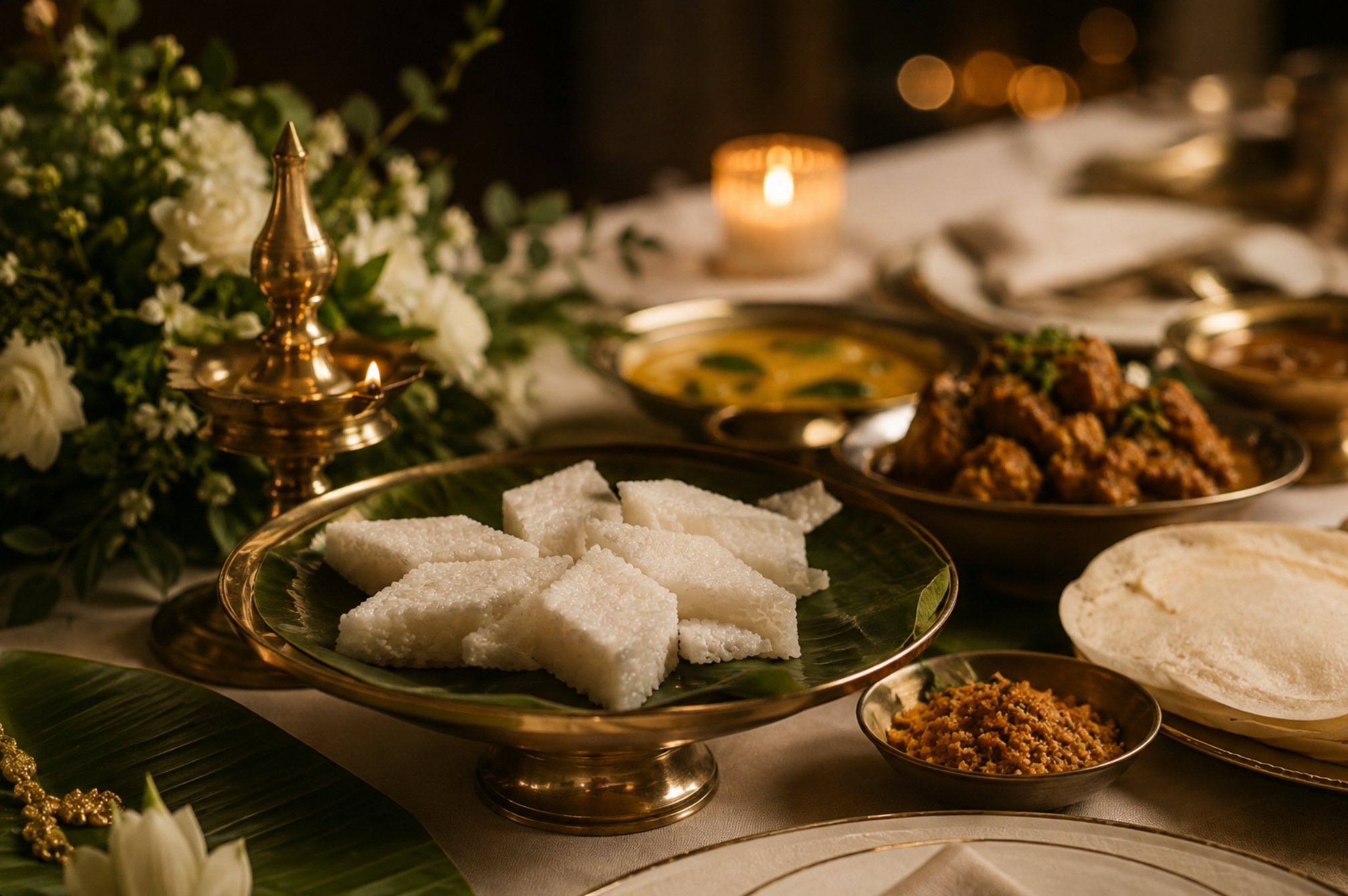
There’s a moment at most Sri Lankan weddings we cater that catches the wider guest list off guard. The bride and groom are offered a small plate of plain white rice, cooked in coconut milk, cut into diamonds. No sauce, no spice, nothing dressed up about it. And yet it’s often the most quietly significant thing served all day.
That’s kiribath — milk rice — and it’s eaten at the start of new beginnings across Sri Lankan tradition, weddings included. It’s a good example of what makes Sri Lankan wedding catering genuinely distinct, not just a regional variation on Indian food. The flavours, the rituals, and the structure of the meal all come from a different place, and a menu that doesn’t understand that ends up flattening something that should be celebrated on its own terms.
Here’s what actually goes into doing it properly.
What makes Sri Lankan wedding catering different — not just “similar to Indian”
It’s a common assumption, and an understandable one, but Sri Lankan cuisine has its own identity, shaped by the island’s specific history and geography.
Coconut is the backbone, not a garnish. Coconut milk, coconut oil, fresh scraped coconut and coconut sambols run through the cuisine constantly — in curries, in hoppers, in sambols served alongside almost everything. It gives the food a richness and roundness that’s different from the ghee-and-cream base common in North Indian cooking.
The spicing has its own signature. Roasted curry powders, curry leaves, pandan, and a generous use of chilli (Jaffna cuisine in particular runs hot) create flavours that are close cousins to South Indian food but distinctly their own.
Rice and hoppers do a lot of the work. Where a North Indian menu might build around naan and roti, a Sri Lankan spread leans on rice — plain, coconut milk rice, or the fragrant lamprais rice — alongside hoppers and string hoppers, which have no real equivalent on most other South Asian menus.
Ritual food carries real weight. Kiribath at the start of the ceremony, betel leaves offered to elders as a mark of respect, and specific dishes tied to Poruwa ceremony traditions all mean the menu isn’t only about feeding guests — parts of it are doing ceremonial work.
Get these things right and the food feels authentic to families who grew up with it, not a rough approximation borrowed from a neighbouring cuisine.
Building the menu: what a proper Sri Lankan wedding spread includes
Starters & short eats
Sri Lankan “short eats” are the equivalent of canapés, built for a cocktail hour or arrival reception. Think fish cutlets, spiced lentil vadai, isso wade (prawn fritters), and mutton rolls — small, punchy, built for eating standing up with a drink in hand.
The curry spread
This is the heart of the meal, and balance matters more than volume. A well-built spread typically includes:
- A fish or seafood curry — often the anchor dish, cooked with tamarind, curry leaves and a roasted spice blend
- A chicken or mutton curry — richer, slower-cooked, sometimes finished with roasted coconut for depth
- Dhal curry (parippu) — a lentil curry that ties the whole plate together, much like dal does on an Indian menu
- Jackfruit curry (polos) — a beloved vegetarian option with a texture close to pulled meat, often a surprise favourite with guests who’ve never tried it
- Beetroot curry and other vegetable curries — bright, slightly sweet counterpoints to the richer meat dishes
The sambols
No Sri Lankan spread is complete without sambols on the side — pol sambol (fresh coconut, chilli and lime) and seeni sambol (a deeply caramelised, sweet-savoury onion relish) in particular. These aren’t optional extras; they’re what makes the rest of the plate work.
Rice, hoppers & string hoppers
Plain rice or coconut milk rice as the base, with a hopper or string hopper live station as an event in itself — the batter hitting the hot pan, the lacy edges crisping up, served fresh with curries and sambol. It’s genuinely one of the most popular live stations we run, and it photographs beautifully.
Lamprais, for a traditional touch
A Dutch Burgher-influenced dish — rice cooked in stock, served with meat curry, a boiled egg, and accompaniments, all wrapped and baked in a banana leaf. It’s not on every wedding menu, but where families want a traditional showpiece, it’s a striking one.
Dessert
Wattalapam is the standout — a coconut and jaggery custard, dense and caramel-sweet, traditionally spiced with cardamom and nutmeg. Curd and kithul treacle (a fermented buffalo curd served with palm treacle) is another beloved finish, offering something cool and lightly tangy after a rich meal.
What it costs: a rough guide
As with any wedding catering, price depends heavily on guest count, venue, and how much of the ceremonial detail (kiribath service, betel leaf presentation, a lamprais course) you want built in. As a general guide for London:
| Package style | Approximate cost per guest | What’s typically included |
|---|---|---|
| Essentials | £45–£60 | Short eats, 2–3 curries, rice, sambols, one dessert |
| Classic wedding spread | £60–£85 | Full curry spread, hopper station, sambol selection, wattalapam, ceremonial kiribath service |
| Premium / multi-course | £85–£120+ | Everything above, plus lamprais course, additional live stations, premium seafood options, expanded dessert table |
These are indicative ranges — always worth getting a tailored quote once you know your guest count and venue, since banqueting suite hire, staffing, and live station requirements all shift the final figure.
Getting it right: what to ask a caterer
If you’re speaking to caterers about a Sri Lankan wedding, a few questions separate the ones who genuinely know the cuisine from the ones offering a generic South Asian menu with a couple of dishes swapped in:
- Have you cooked for Sri Lankan weddings before, and can we speak to a past client?
- Can you differentiate Sinhalese and Jaffna-style spicing if our families want a specific regional profile?
- Do you make your own sambols and roasted curry powders, or are these bought in?
- Can you build in the ceremonial elements — kiribath, betel leaf service — alongside the reception menu?
- Is a hopper or string hopper live station something you run regularly, or would it be a first attempt?
Frequently asked questions
What is traditionally served at a Sri Lankan wedding? A typical spread includes short eats to start, a curry course built around fish, meat, dhal and vegetable curries, rice or coconut milk rice, sambols, and a hopper station, finished with wattalapam. Kiribath (milk rice) often features as a ceremonial dish tied to the start of the celebration.
Is Sri Lankan food the same as South Indian food? They’re related but distinct. Both lean on rice, curry leaves and coconut, but Sri Lankan cuisine has its own spice blends, its own dishes (hoppers, lamprais, wattalapam), and regional variations — particularly the difference between milder Sinhalese cooking and hotter, more intense Jaffna Tamil cuisine.
What is kiribath and why is it served at weddings? Kiribath is rice cooked in coconut milk, traditionally cut into diamonds and eaten plain or with a chilli relish. It’s associated with new beginnings and auspicious occasions across Sri Lankan tradition, which is why it often appears at the very start of a wedding celebration.
Can a hopper station work as a live catering station at a UK wedding venue? Yes — it’s one of the most popular additions we run. It needs the right equipment and space, so it’s worth confirming with your venue and caterer early, but the fresh-cooked, interactive element makes it a genuine highlight for guests.
How much does Sri Lankan wedding catering cost in London? As a rough guide, £45–£60 per guest covers an essentials-level spread, £60–£85 covers a full classic wedding menu with a hopper station, and £85 upward brings in additional courses like lamprais and premium seafood. Final pricing depends on guest count, venue and the level of ceremonial detail included.
Planning a Sri Lankan wedding in London?
At The Clay Oven, we build Sri Lankan wedding menus with the same care and authenticity as every cuisine we serve — real sambols, properly roasted spice blends, and a hopper station that guests genuinely queue for. Whether you want a traditional spread or a modern take with all the ceremonial detail intact, we’ll help you get it right.
The Clay Oven 📞 020 8903 8800 📧 [email protected] 🌐 theclayoven.co.uk