


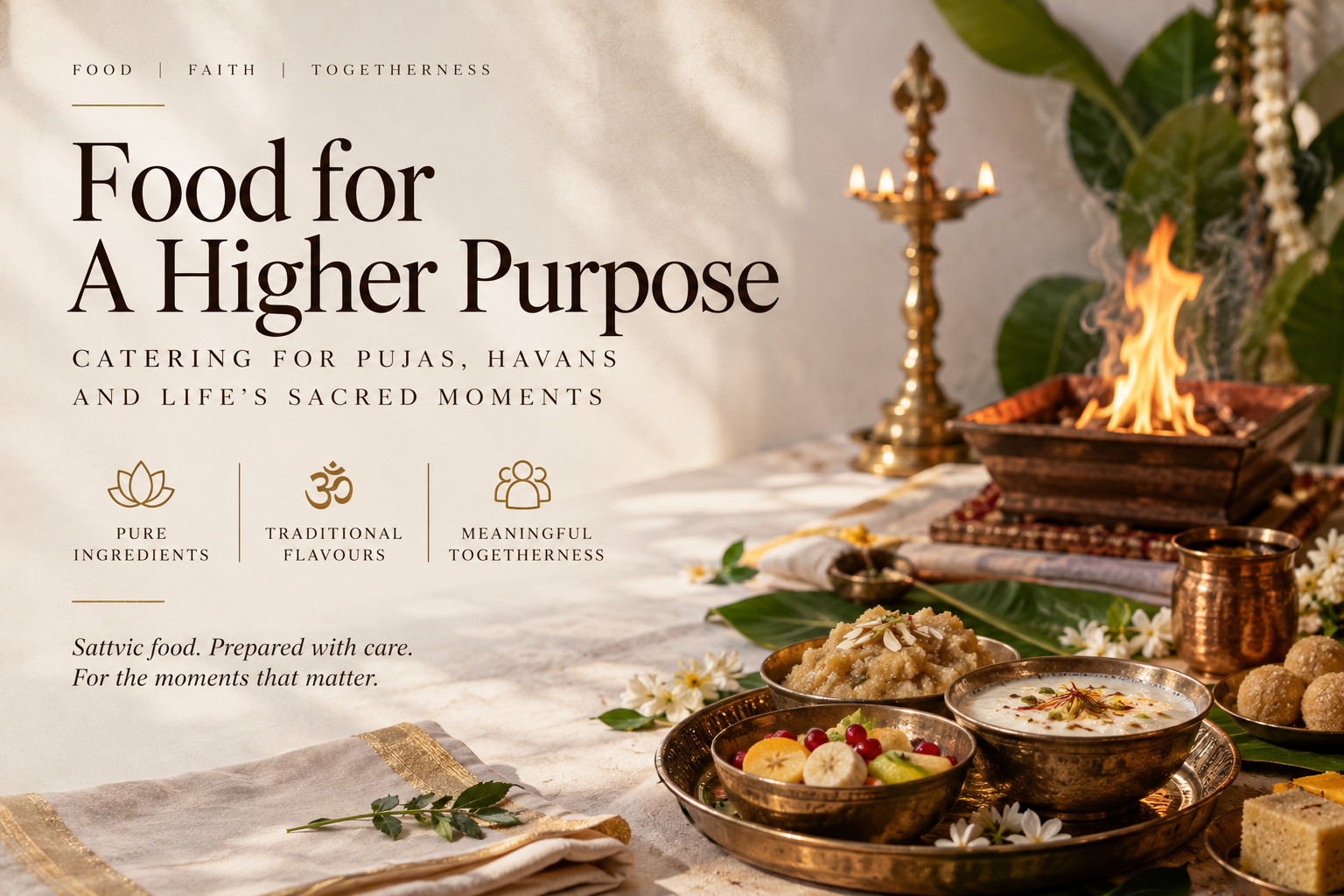
Puja and Havan Catering: What to Serve Before, During and After a Religious Ceremony
There is a quiet kind of catering that happens away from the noise of weddings and Diwali parties — no dhol, no dance floor, no five-hour evening of continuous service. A puja or havan is a different kind of occasion entirely. It is intimate, it is spiritually significant, and the food that surrounds it follows rules that have very little to do with what tastes exciting and everything to do with what is appropriate, pure, and offered in the right spirit.
For families organising a puja or havan in the UK — whether for a housewarming, a new business opening, an anniversary, a specific religious observance, or simply a periodic act of devotion — getting the catering right is not about impressing guests with an elaborate spread. It is about understanding what the occasion actually requires, and honouring that properly. This guide walks through what that looks like, from the food prepared before the ceremony begins to what is offered during it and what follows once the rituals are complete.
Why Puja and Havan Catering Follows Different Rules
A puja is an act of worship, typically involving the invocation of a deity through prayer, offerings, and ritual. A havan takes this further, centring around a sacred fire into which offerings — grains, ghee, herbs, and specific ritual items — are made as part of the ceremony, accompanied by the chanting of mantras. Both are, fundamentally, spiritual acts rather than social occasions, and the food associated with them exists to support that spiritual purpose rather than to entertain a guest list.
This is where the principle of satvik food becomes essential to understand. In Hindu dietary philosophy, food is broadly categorised into three qualities, or gunas: sattvic (pure, light, and conducive to clarity and calm), rajasic (stimulating, spicy, and associated with restlessness), and tamasic (heavy, associated with dullness or inertia). Food prepared for religious ceremonies is almost always sattvic in nature — vegetarian, typically prepared without onion or garlic, without excessive spice or heat, and made with a sense of cleanliness and intention that goes beyond ordinary cooking.
For a caterer without genuine experience in this space, this can sound like a simple checklist to follow. In practice, it requires real understanding — not just omitting certain ingredients, but preparing food in a way that respects the purpose it is serving.
Before the Ceremony: Preparing Guests, Not Just Feeding Them
In the period before a puja or havan begins, food serves a gentler, more preparatory role than it might at a wedding or party. Guests are often arriving quietly, removing their shoes, finding a seat on the floor or in chairs arranged around the ritual space, and settling into the atmosphere of what is about to take place.
Light refreshments at this stage should match that mood. A simple offering of chai and a small selection of sattvic snacks — perhaps a few pieces of fruit, some roasted chana, or a light namkeen without excessive spice — gives guests something to sustain them without creating a heavy, sleepy feeling before a ceremony that may involve sitting for an extended period. This is not the moment for rich, elaborate starters. The purpose of this stage is to welcome people gently and let the atmosphere of the occasion begin to settle over the room.
Many families also prepare items specifically for the ceremony itself at this stage, distinct from what guests will eat. This includes items such as fruit, sweets, and specific ingredients required for the ritual offerings — items that a caterer with genuine experience in this space will understand needs to be kept separate, clean, and ready ahead of time, prepared with particular care given their sacred purpose.
During the Ceremony: The Role of Prasad and Ritual Offerings
At the heart of any puja or havan is the concept of prasad — food that has been offered to the deity as part of the worship and is then distributed to those present as a blessed gift. Prasad is not simply a snack handed round partway through the ceremony. It carries genuine spiritual significance, and the preparation, presentation, and distribution of it should reflect that.
Common prasad offerings include panchamrit, a sweet mixture traditionally made from five ingredients — milk, yoghurt, honey, ghee, and sugar — offered in small quantities as part of the ritual itself. Sweets such as ladoo, halwa, or a simple kheer are also frequently prepared as prasad, often specifically requested by the family based on what feels appropriate to the deity being honoured or the occasion being marked. Fruit, particularly bananas and other seasonal offerings, commonly forms part of the prasad as well.
For a caterer supporting a family through this, the role is often less about creating an elaborate menu and more about preparing these specific items to a genuinely high standard, with the cleanliness and care the occasion demands, and ensuring they are ready at the correct point in the ceremony — not before, and not late. Timing here matters more than at almost any other kind of catered event, because the food is tied directly to the rhythm of the ritual itself, not to a flexible service schedule.
During a havan specifically, certain offerings — grains, ghee, and specific herbs — are made directly into the sacred fire as part of the ceremony rather than eaten at all. A caterer working alongside a pandit or officiant for this kind of ceremony needs to understand which items are for ritual offering into the fire and which are for guests to eat, and prepare and present them accordingly.
After the Ceremony: The Communal Meal
Once the puja or havan concludes, the mood in the room shifts, often quite noticeably. There is a lightness to it — a sense of completion, of relief, of the spiritual work having been properly done — and this is typically when the main meal is served.
This meal, while still sattvic in nature, tends to be more substantial and celebratory than anything offered before the ceremony began. A well-composed post-ceremony spread might include a selection of vegetable dishes prepared without onion or garlic, dal, rice, puri or roti, and a simple raita or curd-based accompaniment. Kheer or a similar milk-based sweet often closes the meal, echoing the sweetness of the prasad offered earlier and bringing the occasion to a gentle, satisfying end.
The atmosphere at this stage is genuinely communal in a way that distinguishes it from the earlier parts of the day. Guests who have just shared in a spiritual experience together now share a meal together, and there is real warmth in that transition — from quiet reverence to relaxed conversation, from ritual to relationship. Food at this stage should support that shift, generous and comforting without losing the underlying sattvic character that has defined the day from the start.
What Makes a Caterer Genuinely Suited to This Kind of Event
Catering a puja or havan well requires a different kind of attentiveness to the one a wedding or party demands. There is no dance floor to energise, no five-hour service window to manage, no live station theatre to create. What there is, instead, is a responsibility to understand and respect the spiritual purpose the food is serving, and to execute it with genuine care rather than treating it as a smaller, simpler version of a bigger event.
This means understanding the distinction between sattvic principles and simple vegetarianism — recognising that some families will want onion and garlic omitted entirely, others may observe additional restrictions around specific ingredients depending on the deity being honoured or the particular tradition being followed, and that these preferences deserve to be asked about and honoured precisely, not assumed.
It also means understanding timing in a way that’s tied to ritual rather than convenience. A caterer used to running a wedding reception on a flexible, adjustable clock needs to recalibrate for an occasion where the food genuinely follows the ceremony, not the other way around — where prasad needs to be ready at a specific moment determined by the pandit conducting the ritual, not whenever the kitchen happens to finish preparing it.
And it means bringing the same quality and cleanliness of preparation to a quiet gathering of twenty family members as to a five-hundred-guest wedding, because the significance of the occasion to the family hosting it has nothing to do with the size of the guest list.
A Different Kind of Hospitality
There is something genuinely valuable in catering an occasion like this properly. Pujas and havans mark some of the most personally significant moments in a family’s life — a new home, a new venture, a period of gratitude or seeking blessing, a remembrance, a milestone observed in the way that generations before have observed it. The food surrounding these moments is not meant to impress. It is meant to honour.
A caterer who understands that distinction, who can prepare a properly considered sattvic menu with genuine care, who respects the rhythm of ritual rather than imposing the rhythm of an event schedule, and who treats prasad with the reverence it deserves rather than as simply another dish on the table — that caterer becomes something more than a vendor. They become part of how a family marks the moments that matter most.